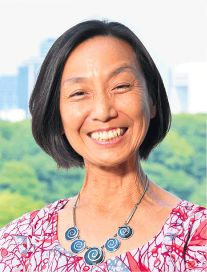
Chief Executive Officer, The Garden of Siloam Dr. Kazuko Kumon Helping Children with Disabilities & Building Inclusive Societies
- Release date :
- Exclusive Interview
Introduction
Haraoka I understand that the origin of the name the "Garden of Siloam", which you founded, comes from a story in the Gospel of John. In this passage, Jesus explains that being born with a disability is not a punishment or a sign of wrongdoing. Rather, every person has value and the potential to live a meaningful life that reflects God's love and purpose. Could you share your thoughts on the meaning of this?
Kumon I believe that we often begin by trying to identify the cause behind everything. I am the same. I feel understanding the cause of a patient's symptoms is extremely important, and doing so can help prevent many problems. However, if we focus too much on the cause, our attention becomes fixed on the past, and we lose sight of the future. What Christ is saying here is that disability does not occur because it is someone's fault, but that it is a part of God's plan. Analyzing the cause is one way to understand the situation, but what is even more important is to consider how we should move forward from here and what we ought to do for the future.
For example, tomorrow I will be meeting with parents who have lost their child. At such times, they may think, "If only we had done something differently then perhaps our child wouldn't have died." I am sure many thoughts like that come to mind. But what is more important is to look at the life that lies ahead for them in the midst of losing their child, and to see how God's will may work within that life.
I believe that this is what God was showing us.
Haraoka That's a positive way of thinking. It also seems to suggest that disability is simply one aspect of being human and should not be viewed as either good or bad.
Kumon It's more important to focus on the difficulties that arise because of a disability than on the disability itself. Some people may not feel troubled by not being able to see, while others may find it extremely inconvenient. We sometimes describe disability as "one aspect" of a person, but I believe that this is not always appropriate. For example, being unable to walk is, of course, very inconvenient. It can lead to discrimination or prevent someone from participating in society. What is essential is for society to change, so that a person can do more even if they can't walk, and for society to provide more choices on how to live life to its fullest, despite their disability.
The social model focuses on how disability affects a person's ability to live, and the real task is to change society by removing barriers and expanding possibilities.
Inspiration Behind the Garden of Siloam & Its Activities
Haraoka It's been 11 years since you established the Garden of Siloam in 2015 and started your work there. Could you briefly explain what motivated you to create the facility and what activities you are involved in?
Kumon First of all, I have always been a Christian, and as a Christian, how to live my life was a major concern for me. Like many people, I wanted to do something that would benefit others, so I went overseas and worked in the healthcare field, but it wasn't easy. For one thing, what I believed was helpful to others was not necessarily actually helpful. I also spent some time working in healthcare from a broader, more systemic perspective, but when I did that, it became difficult to pay attention to the details. As a result, I sometimes lost sight of the meaning of what I was doing and spent nearly 10 years searching for a sense of purpose.
I left Japan in 2000 and have been in Kenya since 2002. While working there for JICA and other organizations' health and medical support programs, I gradually came to feel that it was not enough simply to "do something for others". What mattered more was who I was living for, and with whom I was choosing to live my life. It was during that time that I encountered children with disabilities.
Until then, I had been working in HIV management and maternal and child health, but in the Kenyan society I came to realize that the issues children with disabilities faced were extremely difficult to resolve. These challenges involved problems with the system, discrimination against people with disabilities, and the fact that each disability is so different. Of course, even in maternal and child health or HIV care, each person's life is different, but when it comes to disabilities, the diversity of individual experiences is even greater. For example, someone who cannot walk and someone with an intellectual disability may both be labeled "persons with disabilities", yet their daily lives are completely different. In the midst of all this, I met children who were doing their best to live their lives, and that encounter made me feel that I wanted to walk with them.
Being a clinician, I had been approaching various issues with a focus on healthcare. But once I became friends with the children, I realized that this was not only about health. It also involved the challenges their families faced, and I wanted to create something where everyone could think and work together. That is what led me to establish the Garden of Siloam.
When I thought about what was needed to put a smile on the children's faces, the first thing that came to mind was the need for rehabilitation and medical care. At the same time, however, I also had to consider the fact that many of them were unable to attend school. If children are unable to go to school, we need to think about how they can participate in society. Putting a smile on their faces and making their families happy is also a significant factor. This means we need to consider how to support the families as well. In many cases, having a child with a disability leads to a family falling apart, or the presence of a child with a disability pushes the family further into poverty. The reasons for this include the lack of social security systems, the absence of welfare services, and the fact that mothers cannot go out to work. There are also situations where a single mother abandons her child, leaving the grandmother to raise the child alone. In such cases, we must then consider how to support the grandmother.
Thus, when we think about how a child is to grow up, we also need to provide family support as well as programs to generate income for them. In addition, our facility is not a residential institution but a day care center. This is extremely important. The children grow up in their own homes, live within their communities, come to the center from those communities, and then return to them. Through this process, the community itself can begin to change.
We also think about how to bring about change in the community, just by having these children live in these communities, how to achieve this, how to advocate for the creation of systems where none exist, and how to encourage society to be responsive. In terms of holistic and comprehensive care, we provide direct services such as education, rehabilitation, medical care, and psychological support for children. In addition to this, we also support their families and provide community based assistance.
Haraoka So you are not simply seeing sick children in your capacity as a clinician but rather placing importance on the connections within families and communities and considering the welfare of the whole environment surrounding the child.
Kumon That's right. Health is a significant factor, but good health alone does not guarantee a child's happiness.
How Support for Kenya Has Changed & Diversified
Haraoka In Japan, there are still very few people who study Africa. In contrast, ASEAN countries have very close ties with Japan, and there are experts who are interested in how relations between Japan and ASEAN nations can be further developed from a global perspective. When it comes to Africa, however, there seem to be relatively few people with that kind of interest and awareness. As you mentioned, activities that contribute to welfare and social development are extremely valuable for strengthening relations with Africa. Do many people, whether Japanese or non-Japanese, engage in the kind of activities that you are involved in?
Kumon Africa's colonial past continues to shape many countries on the continent, and the influence of former colonial powers remains significant. At the same time, that picture has been changing quite dramatically in recent decades. When I first went to Kenya in 2002, the country had been independent for less than 40 years, having gained independence in 1963. Back then, I was struck by how visible Britain's influence still was in many aspects of society.
Twenty-five years later, the situation looks quite different. New actors have become increasingly influential, often in ways that have little to do with Kenya's historical ties to Britain. My own work was in HIV/AIDS programs, and in that field the United States has played a particularly prominent role, or some might even say an overly active one. There is no question that this involvement has made a substantial contribution. At the same time, it is important to recognize that many of the foundations were laid earlier. Britain's legacy, for better or worse, had already helped establish much of the institutional framework on which later initiatives were built.
China also has a very significant presence in Africa today. Compared with Japanese aid, the scale of Chinese funding is on a completely different level. In that sense, while foreign assistance was once largely shaped by the influence of the former colonial powers, China has now entered the picture, making the landscape far more diverse.
When I first went to Kenya in 2002, obtaining a work visa was not that difficult. Nor was it difficult to obtain a medical license. At the time, the prevailing attitude was that anyone willing to help was welcome, and there was a strong sense that support from abroad was needed. This brought people from many different backgrounds to work there. Over the past few years, however, obtaining a work visa has become much more difficult. Foreigners are increasingly seen as people who take away local employment opportunities, and there is less willingness to let them come in. I believe the same is true with regard to medical licensing.
Another change is that many Japanese who come today do so through social business initiatives. The phrase "a win-win relationship" with local communities has become much more common, reflecting a growing emphasis on creating benefits for both sides.
Kenya has become increasingly multinational. Nairobi is home to a major United Nations presence, and over time it has developed a solid business infrastructure. While the benefits may not always reach the most vulnerable segments of society, it is nevertheless a country where foreigners can live comfortably and enjoy their time, and many people see it as a place with real business opportunities. Kenya has attracted a wide range of people looking to start small businesses, including social enterprises.
Large corporations have entered the market as well. I have had the opportunity to interact with Toyota Tsusho, for example, and they have been engaged in major initiatives under the slogan "With Africa for Africa."
In that sense, there has been a noticeable shift over time. In the past, many people came to Africa primarily to provide assistance and support. Those people are still here today, of course, but that is no longer the only reason people come. Increasingly, people are coming for business, partnership, and other forms of engagement as well, and that is something I have noticed over the years.
Haraoka Kenya is regarded as one of Africa's more developed countries, and I imagine that is why many people see it as a land of business opportunities.
Kumon Yes, that's true. But from what I've observed, it's not always easy to make it work. Some people are successful, of course, but there are cultural differences, and despite being one of Africa's more developed countries, Kenya still has considerable disparities. Some sectors are very advanced, while others remain underdeveloped, and I feel that this makes things quite challenging.
Challenges in Raising Funds Due to Institutional Gaps
Haraoka I imagine that over the past 11 years you have faced a variety of challenges. Some may have been economic, others technical, and, as you mentioned earlier, there may also have been issues related to African cultural norms and discrimination against people with disabilities. I would appreciate it if you could share how you have approached and addressed these challenges.
Kumon I'm often asked that question, but to be honest I'm not always sure how to answer it. One thing I wonder is whether these challenges are really difficult because they are in Africa. Even if you work in Japan under ordinary circumstances, there are plenty of difficulties. It's not always clear whether something is difficult because it's Japan, because of the individual involved, or because of society as a whole.
For example, I do believe there are certain difficulties that are specific to working in Africa, differences in concepts of time, limitations in infrastructure, and various other practical challenges. However, some of the issues that I find most difficult, such as interpersonal relationships, are not necessarily problems because we are in Africa. They may actually be the same kinds of issues people encounter in workplaces anywhere: internal relationships, organizational structures, and the way teams work together.
For instance, there have been periods when friction between departments became quite serious and created significant challenges. There are also times, particularly around elections, when tensions arise between different ethnic groups. However, beyond those issues, what often matters in practice is whether there is a culture of mutual respect. This is not a matter of Africa lacking such a culture. Rather, people in each department are often so focused on doing their own jobs well that they lose sight of one another. But that is something that happens quite commonly in Japan as well.
In that sense, many of the challenges we face are not unique to Africa. They are challenges that arise wherever people and organizations are working to create change for reform. What I have found important is creating opportunities for people to listen to one another, understand each other's perspectives, and build relationships based on trust and respect. I believe those efforts are necessary regardless of what country or culture one works in.
However, the greatest challenge for the Garden of Siloam is financial sustainability. The reason why the funding is so difficult is that there is no established system to support it. In Japan, welfare-related businesses exist because there is a framework that allows them to survive, even if they are not highly profitable. Some organizations may generate substantial profits, but the key point is that there are institutional mechanisms that make it possible to continue operating without having to earn large profits.
For example, there may be government subsidies based on having a certain number of employees or service users. There are also disability pension schemes for beneficiaries, and some of the costs can be covered through those payments.
The biggest difference, perhaps, is between operating in an environment where such systems are in place and operating in one where they do not exist at all. When there are no subsidies, no disability benefits, and no public support structures, organizations must secure all of the necessary resources on their own. That is probably the most significant difference. The largest part of my work, by far, is fundraising, so that is naturally the challenge I feel most strongly about. Cultural differences have not been a major challenge for me, as I've adapted after living here for nearly 25 years.
Haraoka If we are to create new systems for funding, the issue goes beyond welfare alone. It becomes a matter of economic systems and political structures as well. Addressing it would require large-scale efforts and sustained advocacy for change.
Kumon Yes, that's right. For example, there is a government program that provides educational support for children with disabilities, but the number of beneficiaries is far too limited, leaving many children without assistance. In our case, we approached the local authorities and were eventually able to secure support for children attending the Garden of Siloam.
The problem is that these decisions are often driven less by institutional policy than by political incentives. Support may be granted because it helps officials gain votes in the next election, much like infrastructure projects or other public benefits are sometimes used to build political support. Corruption and patronage also remain deeply entrenched, making systemic change extremely difficult.
Rather than trying to transform the entire system at once, we focus on improving the lives of the children in our care. By securing the resources they need and showing what is possible, we can raise public awareness and, hopefully, contribute to gradual social change. In that sense, our approach has been to keep making small but steady efforts, believing that each step can help move society in a better direction.
Japan Today: Population Aging & Healthcare Challenges
Haraoka In Japan's aging society, it is often said that for older adults to achieve both mental and physical well-being, it is important to engage in work that is appreciated by others, such as volunteer activities, rather than focusing solely on financial rewards. Some people also argue that having a sense of purpose in life, or ikigai, is one of the keys to healthy longevity. From that perspective, I wonder whether working overseas in search of such a sense of purpose could be a meaningful way of life for some older Japanese adults. What are your thoughts on this?
I have also heard that an increasing number of Japanese physicians are leaving clinical practice to become healthcare consultants because financial pressures on hospitals have made it difficult to provide adequate compensation. Given that situation, I wonder whether some of these doctors might find greater fulfillment by working in countries of the Global South, where their skills could have a direct impact and where they might experience a stronger sense of purpose of life. What is your view on this?
Kumon To answer your first question, the fundamental philosophy behind our work is that human relationships are based on mutual giving and receiving, regardless of whether a person is elderly, has a disability, or belongs to any other group. When we talk about ikigai, the focus can sometimes remain centered on oneself. However, when viewed from the perspective of society, I believe that things function best through interaction and mutual support among people.
For example, our staff care for children at our facility every day. They clean up children's feces and vomit, and often work under very demanding conditions. Of course, receiving a salary is an important source of motivation. But I don't think that is the only reason they continue working. Rather, I believe it is because what they receive from the children is far greater than what they give. The relationships they build, the joy they experience, and the lessons they learn from the children provide a deep sense of purpose of life that cannot be measured in financial terms.
They are able to see firsthand the truly wonderful qualities that these children possess. Many of the children have grown up isolated from society, often confined to very limited environments. In such circumstances, they have little opportunity to share the gifts and strengths they inherently possess. I believe that people reveal their true potential and individual values through giving to others. Wherever there is meaningful human connection, there is growth. And that growth is not only personal growth for the individuals involved but is also growth for society as a whole.
I think helping others merely to find a sense of purpose in life for oneself is a one-way street. The children are happy because they see that the staff genuinely enjoy being with them and sharing their lives with them. And when the staff see the children happy, they in turn find happiness themselves - not just a sense purpose in life. It becomes a positive cycle in which everyone helps one another grow. That is why a society's priorities and values matter so much. A society that values only individual achievement, in my view, cannot truly develop. Real growth happens through relationships, mutual care, and the ways people give to and receive from one another.
Of course, I think it's wonderful when older people go abroad as volunteers. But if they are only looking for a sense of living purpose for themselves, they may not find it anywhere. What's important is noticing the people around us who need help. A sense of purpose in life will often follow it naturally.
When it comes to healthcare systems, there is no easy answer. It largely depends on what a society values. In countries like the United Kingdom, where healthcare is available to everyone, the system has become so overstretched that getting specialized treatment can be very difficult. In trying to make healthcare accessible to all, the system can end up struggling to provide quality care to everyone. At the other extreme, in countries like the United States, those who can afford it have access to advanced care, while many others are left behind.
So I sometimes feel that the key question is not simply how much doctors are paid. If they are earning a living cost, what really matters is whether they find meaning and satisfaction in the work they do. Questions about health insurance and healthcare systems don't have simple answers. Kenya, for example, is now moving toward universal health coverage.
A healthcare system is something an entire society builds together, so the outcome depends on the values people choose to uphold. In countries like the US, where individual freedom is highly valued, many people can end up being left behind. The real question is whether we want a society centered on individual choice or one that seeks the well-being of everyone. Healthcare and health insurance systems are ultimately a reflection of those choices.
Vision for the Future
Haraoka Finally, if you don't mind, could you share your aspirations for the future and what you hope to accomplish through your work looking ahead?
Kumon As I grow older, one of the questions that weighs on my mind at this point in my life is how much of what I hope to achieve can be realized. In the first 10 years, we focused on training staff so they can genuinely understand and respond to the children's needs. We brought in experts in rehabilitation, medical care, and education, and worked to build a team capable of supporting children with disabilities. Through these efforts, we now have a staff of dedicated professionals who are able to respond effectively to the needs of children with disabilities. The challenge for the next 10 years is to broaden the reach of their work beyond the children in Siloam. I believe they have much to contribute to society, and creating those opportunities is a major goal for the future.
Today, more than 200 children are on our waiting list, and sadly, some pass away before they are admitted. That reality shows that focusing only on what happens within our facility is not enough. Going forward, one of our biggest challenges is finding ways to connect with the broader community and become an organization that can make a difference in society as a whole.
Haraoka In other words, you're looking not only to expand the organization itself, but also to create more facilities like this one.
Kumon That's right. If we simply expand under the current model, we would go bankrupt, so making the facility larger is not the answer. What is important is to consider what kind of facilities we should create and how we can support others in pursuing the work they want to do. I believe that will become an important part of our work from now on.
Haraoka Thank you for taking the time to speak with us and for sharing valuable insights.
Written and translated by Naoyuki Haraoka, Advisor of Japan SPOTLIGHT, with the cooperation of Tape Rewrite Co.