
Empowering Women Through University Education in Japan
- Release date :
- Exclusive Interview
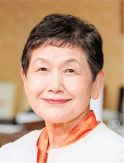
The Japan SPOTLIGHTJanuary/February 2026 issue's Exclusive Interview features Mariko Bando, chancellor of Showa Women's University. Dr. Bando has implemented numerous reforms at the university to empower Japanese women to make greater contributions to society, resulting in many successful alumni. Her efforts have drawn attention from other Japanese universities and are establishing a new model for women's education in Japan. She is also dedicated to the internationalization of university education and stands as a leading figure in Japan's educational community.
(Interviewed on Dec. 1, 2025)
Challenges in Japanese Universities & Women's College Education
HaraokaShowa Women's University has an exceptionally high reputation and is managed superbly. Based on your experience of leading women's education in Japan, I would very much like to hear your views on the current state of education in Japan and women's education specifically.
BandoIt's been over 20 years since I came to Showa Women's University. Before that, I worked as a civil servant, ending that chapter of my career as director-general of the Gender Equality Bureau at the Cabinet Office. Prior to that, I held various positions, including chief of the Consumer Statistics Division at the Statistics Bureau and senior advisor in charge of public opinion surveys at the Public Relations Office. Throughout that time, I understood that while laws and systems are certainly very important, the work of education - nurturing the people who will actually live within those frameworks - is also extremely vital. However, when I arrived in the educational field, I didn't know where to begin. At that time, the social role expected of women in the 20th century at women's universities was not for them to become pillars of society themselves, but rather to cultivate themselves to be good wives and wise mothers who would support and raise husbands and children. I felt that women themselves needed to acquire the strength to be needed in society and to support society. Cultivating such individuals, I believed, was our primary mission.
At Showa Women's University, the previous approach was to have a career support services office within the student affairs department. The prevailing mindset was that women would work for two or three years after graduation before marrying and entering the home. One major reform was establishing a new organization, the Center for Career Development, creating a system where both faculty and staff collaborate to actively support student employment.
The second reform involved providing students with career education that clearly communicates Japan's current employment landscape. These combined efforts significantly improved our actual employment rate. Among women's universities nationwide with over 1,000 graduates, we achieved the top ranking 13 times over a 15-year period. Japanese women's education has traditionally emphasized liberal arts, focusing on cultivating personalities with enriched knowledge of culture, while practical education needed in society has often been insufficient.
On the other hand, men's education focused on practical studies useful for employment, rather than liberal arts. Currently, as a reaction to this, there is a strong call for men in business to acquire more knowledge of culture and study liberal arts. I felt that women should focus more on studies useful in society, and I emphasized that aspect.
I believe this is a particular challenge for Japanese higher education. While university enrollment rates are high - 62% for men and 56% for women - what about the quality? Students are rigorously screened through competitive exams to get in, but once enrolled, they aren't sufficiently challenged. This is especially prevalent in the humanities and social sciences. We need to enhance the quality of university education in the so-called liberal arts.
And the reason why most people don't study much at the universities is that during job interviews, the hiring decision is heavily influenced by the interview itself, and university grades aren't taken into consideration. I think society, or rather the business world, has low expectations for university education.
This is a major issue for Japan, and it's reflected in Japan's very low graduate school enrollment rate. While countries like China and other Asian nations are seeing rapid growth in graduate school enrollment, Japan's rate is only 12.5%. While 44% of science majors and 38% of engineering majors advance to master's programs, only 4% of humanities majors and a mere 3% of sociology majors do so. It seems society prefers that students gain experience and grow through on-the-job training after employment, rather than studying subjects deemed useless for the future during university.
There's a prevailing sentiment in Japan's business community that it's better to obtain qualifications like the bar exam than to hold a master's degree. Of course, this isn't the fault of the business community. Rather, Japanese universities lacked the understanding that graduate schools should be a place for training aspiring researchers and highly skilled professionals. This tendency is particularly strong in the social sciences and humanities. While engineering fields have a somewhat established career path of obtaining a master's degree before joining a company, the humanities are different. I believe this is a major challenge.
Furthermore, the biggest challenge for women is that most university majors are in the humanities. Japan as a whole has too many humanities majors. Among them, women in particular tend to choose humanities. This leads to low graduate school enrollment rates. This is a major issue.
HaraokaHowever, recently, in an effort to increase labor mobility, they are steadily introducing job-based employment. This approach evaluates individuals based on their expertise and capabilities, so perhaps the importance of graduate education will start to be recognized even among those in the humanities.
BandoUnfortunately, while we say we're shifting to job-based employment and moving away from the membership-based system, Japan is still in the transition phase. We're still groping our way through trial and error regarding how to train job-based professionals, how to enable them to thrive within that system, and how to treat them.
HaraokaShowa Women's University has been achieving very high employment rates. Regarding the background behind this, is there anything else you'd like to add?
BandoThe Showa generation (1926-1989) seem to largely hold the view that a woman's happiness lies in creating a warm home blessed with a husband and children. But that's a story from the Showa Era, when Japan had more leeway. I encourage students to embrace the vision of a lifelong professional journey.
Over the past 20-plus years, Japan has developed systems supporting women's careers - such as childcare leave and daycare facilities - that are far more advanced than in the United States. Having been a civil servant myself, I can say with confidence that Japan's systems are much more comprehensive than the US ones. They're on par with those in Scandinavia.
Therefore, at Showa Women's University, we thoroughly teach first-year students that women must utilize these systems to design their own lives. For example, we advise them that if they interrupt their careers due to childbirth and childcare, then return to part-time or non-regular employment, it could mean giving up over 200 million yen in lifetime earnings. We also point out that one-third of people who marry now will divorce, and one in seven children of single mothers live in poverty.
The Importance of Global Education
HaraokaGlobal education is highly valued, and I believe the proximity of Temple University, Japan Campus (TUJ) is part of that reason. Is the fact that global education is one of the pillars a factor contributing to the high evaluation in employment outcomes?
BandoYes. I believe that's a contributing factor. The reason is, first, since there are few businessmen who are good at English, it's probably better for women to aim for a blue ocean in English business communication. For women, I think it could be an asset.
HaraokaYou've established cooperative relationships not only with Temple University but with various other overseas universities as well.
BandoWe have a Double Degree Program (DDP) where students study at Showa Women's University for two and a half to three years and then study for two years at our partner university overseas, allowing them to earn degrees from both institutions. It's a program where you can earn two degrees (bachelor's degrees): one from Showa Women's University and one from various partner universities in countries like the US, South Korea, China, and Australia. There are a few other universities besides ours that offer this kind of program, but our university has produced over 100 graduates.
Showa Women's University students can take the US university courses and earn degrees at TUJ, which shares the same campus, while remaining in Japan. The number of students who earned double degrees with TUJ grew from four initially to 15 in 2025, and they graduated from Temple University in May 2025. They are scheduled to graduate from Showa Women's University this spring. With the support of faculty and the hard work of students, the number of students earning double degrees at our university is steadily increasing.
However, having served as university president and chairperson of the board of trustees, and now holding the position of chancellor, I feel frustrated that many people in Japan do not understand the wide variety of study abroad experiences available. For instance, there is a significant gap that often goes unrecognized between a study abroad program like a two-week language course in the US and our kind of program, where students sit alongside students from partner universities in classes, submit proper reports, take exams, earn credits, and even pursue degrees. I believe it is essential for everyone to recognize this distinction.
HaraokaAre there opportunities to study abroad at universities in countries that use languages other than English?
BandoYes, DDP also offers Chinese and Korean. Shanghai Jiao Tong University, known as a national key university in China, is one of our partner institutions. Our university established a sister-school agreement with them in 1992, and subsequently donated an auditorium named Seiseido to Shanghai Jiao Tong University. We have continued our exchange activities since then. Shanghai Jiao Tong University is also a DDP partner university, and has the largest number of graduates.
Furthermore, Showa Women's University has maintained a long-standing cooperative relationship with Vietnam. Our Institute of International Culture has been leading the support efforts, with faculty members from our university specializing in urban planning and environmental studies, for the restoration of Hoi An - a town in central Vietnam, just near Da Nang, where a Japanese settlement once existed. This town is now a World Heritage site.
Therefore, students in the Department of International Studies of the Faculty of International Humanities can also major in Vietnamese. The University of Social Sciences and Humanities, Vietnam National University, Hanoi (VNU-Hanoi) is also one of our partner universities.
HaraokaThose individual connections between universities, organizations, or even individuals are extremely important.
BandoThat's right. The reason Showa Women's University has a partnership agreement with Vietnam National University, Hanoi is because there's a connection: a graduate of Showa Women's University, who received a full scholarship, is now the head of the Japanese Language Department. There are also graduates of Showa Women's University teaching in the Japanese Language Department at the Royal University of Phnom Penh. I believe we must sow these seeds for the future.
HaraokaDo you have any future plans or goals related to this global education?
BandoYes. When we invited TUJ onto our campus, our goal was to create a program where students could take classes in English at Showa Women's University and graduate with a degree earned entirely in English. To attract international students, we need to enhance our offerings, but since that takes some time, we decided to create a short path for them to study at a US university right next to our campus. Building on this, I aim to collaborate also with Temple University to establish a program at Showa Women's University where students can graduate with a degree earned entirely in English.
HaraokaYou are actively establishing various new academic departments. The newly established Department of International Japan Studies, launched this year, aims to cultivate talent capable of conveying Japan's strengths to people overseas. This is precisely the purpose of our magazine.
BandoIt's not just about communicating in English; the content matters. You must have something meaningful to convey about Japanese culture and society. Another point is that even within Japan, students still don't fully grasp the revitalization of local economies. Our goal is for them to study Japan's various challenges and attractions, then communicate these in English.
While that isn't our primary goal, the demand for such skills among inbound visitors is growing tremendously. Consequently, there are many job opportunities in these fields. I believe students from the Department of International Japan Studies can meet the needs of Japanese companies seeking international talent, not just the tourism industry.
HaraokaAs Japan moves toward becoming a tourism-based nation through enhanced inbound travel, there are few people who can properly explain Japan in English. The lack of professional guides, in particular, seems to be a major concern.
BandoFurthermore, even at hotels, there seems to be a significant shortage of personnel - for instance, having staff at the front desk but no one to manage them. This makes it difficult for visitors who come all the way to Japan to become repeat customers. Therefore, we are determined to address this issue by securing a supply of personnel for such areas.
Responding to Rapidly Advancing Information Technology
HaraokaAs the next new initiative, the Faculty of Informatics is scheduled to be established in 2026. I would appreciate it if you could tell us about its objectives and the educational content it aims to provide.
BandoWith information technology advancing at an incredible pace, it has become essential for women to play a solid role as key players within this landscape. I believe anyone can acquire the skills to effectively utilize information. Beyond that, we aim to cultivate talent capable of bridging the gap between pure science specialists and business professionals - individuals who can acquire knowledge about which fields to apply these skills in and how to do so. We want this Faculty of Informatics to cultivate individuals who are aware of the challenges in applying digitalization and information technology to specific business fields. We aim to develop people who can specify objectives and methods for digital engineers and who can write specifications.
HaraokaThat's important, isn't it?
BandoWhat we call "requirements definition" in technical terms - it's about developing the ability to clearly communicate what you want computers, digital systems, and AI to do. Showa Women's University hosts industry-academia exchange meetings where we invite representatives from companies that hire our graduates. At recent meetings, the Faculty of Informatics consistently had the highest demand. While the first cohort of students will enroll next April and we haven't yet had any graduates, companies asked questions like what kind of classes we offer and requested internships with us. The high level of interest confirmed this is a field where talent is genuinely sought after.
HaraokaIt seems we're entering an era where competitiveness hinges on whether one can master AI, and I believe that's absolutely true.
BandoHowever, because the pace of development is extremely rapid, how to effectively utilize data science is also evolving year after year, just like data science itself. Many of the faculty members in this department are in their 30s, and I sincerely hope they will develop new, exciting fields themselves.
The Importance of Entrepreneurial Education
HaraokaIt seems that at many universities these days, there's a significant increase in the number of people who want to start their own businesses rather than join large corporations.
Bando The number of people becoming public servants is declining significantly.
HaraokaIf that's the case, Showa Women's University's Faculty of Informatics and Department of International Japan Studies seem to align quite well with the image of an entrepreneur. Female entrepreneurs, in particular, are highly valued worldwide.
BandoThat's right. I've been advocating for creating an entrepreneurship course within the Faculty of Global Business established in 2013. For women to fully utilize their abilities in Japanese companies going forward, rather than trying to fit into a membership-based system centered around men's work styles by saying "I can work just as hard as the men," I truly believe aiming for entrepreneurship - where they can design new ways of working themselves - is the better path.
However, while it seems more people in Japan are starting businesses directly from university, I feel it's more realistic to work for at least seven or eight years before launching a venture. During those seven or eight years, you learn about the real world on the job - not just through ideas, but by gaining practical experience in how businesses are actually run. Only then should you aspire to start your own business.
And most importantly, I believe entrepreneurship won't succeed unless you build a team that includes legal and corporate accounting experts who can help and advise young people with ideas and energy, and of course those who provide funding. To learn the importance of starting a business with such a team, I think it's better to start your venture seven or eight years down the line.
Lifelong Learning in an Aging Society
Haraoka Speaking of that, isn't lifelong education also important? It's crucial to effectively combine the experience of older adults with the vitality of younger people to build strong teams between the two generations. I also feel this university has the potential to contribute to that.
BandoThank you. That's crucial. Amid growing emphasis on lifelong learning - or reskilling - our university established a new Professional Graduate School in 2023. It allows working professionals to earn a master's degree while employed. Combining the capabilities of older individuals, as you mentioned, with younger people to create business opportunities is a key challenge. This Professional Graduate School primarily enrolls people in their 40s and 50s, preparing them for new challenges in the latter half of their lives.
Reskilling is the concept that as industrial structures undergo transformation, labor must shift from old fields to new ones, and workers must acquire the skills required for this transition. This differs somewhat from previous approaches to senior education and lifelong learning, which primarily focused on cultivating knowledge on liberal arts.
Connections with the Local Community
HaraokaIs it your policy to strengthen ties with the local community as well?
BandoSince TUJ relocated to the Showa Women's University Setagaya Campus, student exchanges between the two universities have become even more active through credit transfer programs, double degree programs, and various extracurricular activities. It is true that the image of Sangenjaya, our location, is changing.
Furthermore, we deepen our ties with the community through project-based learning. This includes collaborations, like students from the Department of Business Design of the Faculty of Global Business working alongside local shopping district members in Setagaya Ward to implement marketing strategies, or engaging with companies involved in marketing for foreign-affiliated businesses. We also undertake regional revitalization projects, such as partnering with local cities like Tsuruoka in Yamagata Prefecture and Higashiizu town in Shizuoka Prefecture to invigorate their communities. When we undertake projects to revitalize these areas, local communities are very pleased that urban female students bring fresh perspectives to the region. While regional universities have strong ties with local communities, Setagaya Ward itself is home to 17 universities.
HaraokaIn even more depopulated areas, this will lead to regional revitalization and restoration.
BandoThat's right. The university is expected to play a central role in the community.
The Issue of Foreign Workers
HaraokaWhile there is discussion about using AI more to boost labor productivity in response to population decline, there is also debate about the importance of utilizing foreign labor. Foreign workers are already present in places like convenience stores. How to fully utilize and integrate them into Japanese society is a critical challenge. What are your thoughts?
BandoCurrently, there are 3.67 million registered foreign workers. As we aim to increase this number over the next decade, likely doubling or tripling it, I believe the fundamental requirement is that these individuals understand Japanese and the rules of Japanese society, and comprehend Japanese culture. Japan must provide support to achieve this. If we simply demand they perform low-wage, unskilled labor that Japanese people won't do, no one will come and it will negatively impact Japan's future.
With the weak yen, the economic advantage of working in Japan is said to be declining compared to places like South Korea or Taiwan. To attract foreign workers to Japan, Japanese people must accept them as colleagues. Language is the biggest barrier, and I believe teaching them the language is the key to integrating them into society.
Showa Women's University also sought to attract international students, establishing a Center for Japanese Language Education in 2024. By creating this center even before the number of international students grew significantly, the university aimed to build a support system enabling those with limited Japanese proficiency to write reports and navigate challenges in student life.
I believe it's important that among foreign workers, not only those who start working immediately, but also those who study at universities and acquire specialized knowledge needed by Japanese society, integrate fully into Japanese society as full members.
Strengthening Ties Between Asia & Japan Through Education
HaraokaMy final question. Amid some opinions that the era of American leadership has ended, Japan must pursue creative diplomacy. That said, Asia-Pacific nations have historically been close allies. Building even closer ties with these countries seems most crucial. What are your thoughts? Of course, building close ties with the Global South as a whole is crucial. But a key challenge for us is how to foster good relations with ASEAN specifically and how to ensure Japan is seen as an irreplaceable partner by ASEAN. How might universities contribute to this effort?
BandoEconomically, I think the Japanese government has built tremendous trust over the past 80 years through its ODA and various forms of economic cooperation, while also refraining from excessive political interference. Going forward, I think we must further foster people-to-people exchanges and human relationships. The US is now withdrawing from such international exchanges, but I believe the Fulbright scholarship program and American universities accepting large numbers of international students helped spread understanding of America around the world.
Even if we can't achieve that, we must at least promote Asian students studying at Japanese universities much more. Perhaps reflecting the growing number of people seeking advanced degrees, Chinese students seem particularly prominent in Showa Women's University's master's programs. Overseas students are also coming to places like the University of Tokyo and other national universities. For foreign students, the very high cost of tuition in the US is also a factor.
For these reasons, Japanese graduate schools and universities, aided by the weak yen, have become places where one can receive relatively inexpensive higher education. However, it's not just about being cheap. We must do more to ensure that those who come here truly develop their abilities. Otherwise, it's unacceptable if even Japanese society continues to undervalue what one studies in university. Japanese universities must enhance their educational content to become institutions chosen by students from across Asia. For both women and international students, Japanese universities must be places truly worthy of study.
HaraokaThank you very much for taking the time to share such valuable insights despite your busy schedule.
Written and translated by Naoyuki Haraoka, editor-in-chief of Japan SPOTLIGHT, with the cooperation of Tape Rewrite Co.