
Roundtable on "Aiming for a Service Industry that Leads Japan & the World" (Nov. 18, 2025)
- Release date :
- Roundtable
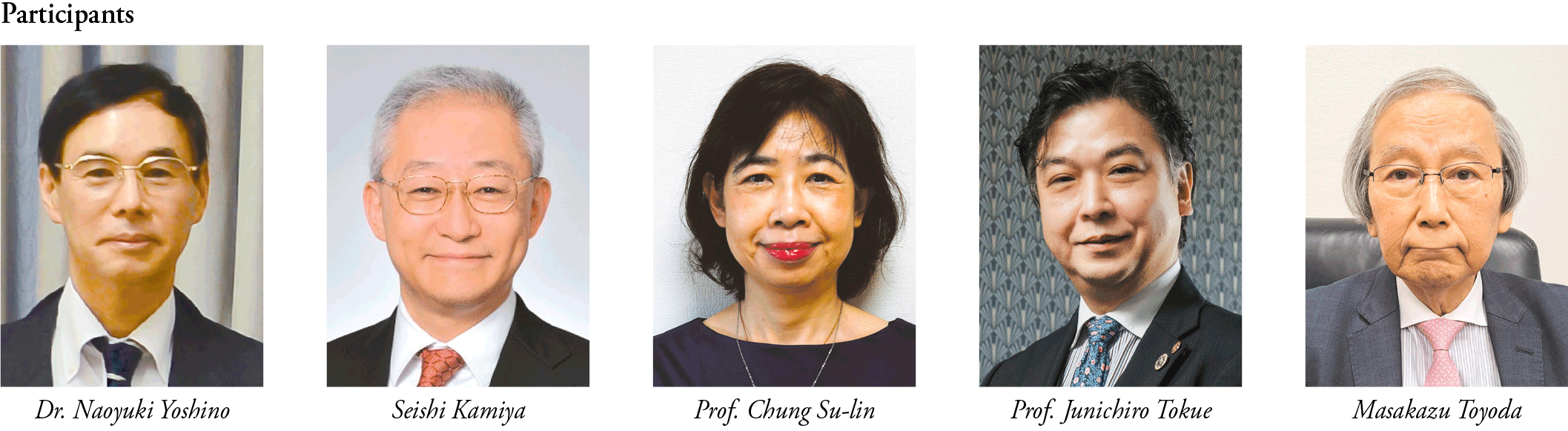
Participants
Dr. Naoyuki Yoshino, emeritus professor, Keio University
Seishi Kamiya, retired partner at Deloitte Tohmatsu LLC.
Prof. Chung Su-lin, Faculty of Business Administration, Toyo Universtiy
Prof. Junichiro Tokue, Faculty of International Tourism Management, Toyo University
Moderator: Masakazu Toyoda, chairman & CEO, Japan Economic Foundation (JEF)
Abstracts of Discussion
• Japan's service industries, including consulting, retail, and lodging, have demonstrated a strong domestic performance rooted in quality, customization, and customer-centric practices. However, their international presence remains limited due to over-adaptation to Japan-specific systems and insufficient scalability. Strengthening global competitiveness requires clearer visualization of service values and alignment with international standards.
• Digital transformation and AI adoption are essential to raise productivity, reduce costs, and better leverage customer data across service sectors. Given population decline, etc. at home, overseas expansion - often through partnerships or localized adaptation - is unavoidable for sustainable growth. M&A is viewed as a critical tool to acquire scale, talent, and local market access, especially where organizational expansion is difficult.
• Participants emphasized the need for stronger government involvement in global standard-setting and international market entry. Public-private collaboration can help overcome language barriers, regulatory hurdles, and disadvantages faced by non-English-speaking countries. Policies supporting talent mobility, fair competition, and digital infrastructure are key to elevating Japan's service industries globally.
Introduction It has long been said that Japan's economy has endured a "lost 30 years". However, thanks to the efforts of the late Prime Minister Shinzo Abe's administration and its successors, it is now said that Japan has finally begun to emerge from deflation. The government of Sanae Takaichi, which took office at the end of October, has stated it would pursue a "proactive fiscal policy" with responsibility.
Amid ongoing geopolitical uncertainties like the conflicts in Ukraine and Gaza, coupled with tariff hikes by the administration of US President Donald Trump, cautious optimism is emerging about how much brightness the Japanese economy can regain. Japan is often regarded as a nation of manufacturing, centered on automobiles. However, industries with the potential to lead the world also exist in significant numbers within Japan's service sector. This year, the Japan Economic Foundation convened expert study groups on the theme of "Challenges and Responses for Japan's Leading Service Industries" across six sectors: finance, consulting, railways/shipping, general trading companies, retail, and lodging services. While these service industries demonstrate strong performances within Japan, the study concluded that significant challenges remain for them to achieve top-tier status internationally.
This roundtable discussion will feature the chairperson who has led our expert study group, along with experts in consulting, retail, and lodging services - selected from these promising service industries - to discuss future challenges and responses. First, we would like each expert to share their insights on the current state and international positioning of their respective Japanese service industries, highlighting their strengths and weaknesses.
Second, the study group has identified at least three key challenges for achieving internationally competitive performance: advancing DX (Digital Transformation), expanding overseas business, and pursuing M&A. How is each industry addressing these? Third, we seek input on expectations for the government. What actions are expected from the government to improve the respective business environments?
I would like to introduce the experts we have invited. First, Prof. Emeritus Naoyuki Yoshino of Keio University, who served as the chairperson of the expert study group. Next, from the consulting field, Mr. Seishi Kamiya, retired partner at Deloitte Tohmatsu LLC. From the retail sector, we have Prof. Chung Su-lin from Toyo University's Faculty of Business Administration. Additionally, from the lodging services sector, that is the ryokan and hotel industry, we welcome Associate Prof. Junichiro Tokue from Toyo University's Faculty of International Tourism Management.
Current State & International Positioning of Japan's Service Industry
ToyodaLet us now proceed to the discussion. First, "The Current State and International Positioning of Japan's Service Industry". Prof. Yoshino, we would like to request your overall assessment of the six service industries covered in our study group. This is a general evaluation of their positioning within the Japanese economy and their international standing.
YoshinoAs you mentioned, Japan's structural issues require proactive fiscal measures. Within fiscal policy, the most crucial elements are policies that boost productivity and increase R&D investment. My research indicates that benefits and similar measures only yield short-term effects. Within fiscal policy, I strongly urge this administration to pursue measures aimed at productivity and technological advancement. I hope they will work towards lowering prices through productivity gains that offset the rise in import prices caused by yen depreciation.
The second structural issue is Japan's aging population and declining birthrate. Considering this, the service industry must inevitably expand overseas. Furthermore, Japan is at the forefront of daily service innovations addressing the needs of the elderly. The services developed from this experience to address aging populations have significant potential for export and deployment in other countries.
Third, I believe it is essential to strengthen the service industry to support regional economies. There is significant room for innovation, such as encouraging inbound tourists to enjoy local Japanese cuisine and hospitality, prompting repeat visits, or offering services like extended stays at regional hot springs with clean air for medical treatment. It is necessary to promote these regional services globally via the Internet.
The fourth major issue facing Japan is that start-ups and ventures have struggled to grow over the past two decades. To strengthen the service industry, financing is needed to fund new service businesses and expand service sectors where Japan has strengths. In addition to the crowdfunding that has been advancing for some time, innovative funds have recently emerged. These funds allocate around 30% or 40% to securities like stocks, while directing 70% or 60% toward funding regional start-ups.
Fifth, while this point wasn't discussed much this time, recent conversations with private sector representatives led to the idea that Japan may struggle to cultivate "super humans". While the United States has produced figures like Bill Gates, Japan unfortunately seems unable to nurture individuals who excel exceptionally in specific fields. How can we cultivate super talents in Japan? I believe we also need platforms where such individuals can thrive.
The competitiveness of manufacturing is visible. Anyone understands that making good products cheaply is key. There's no language barrier like English to get in the way. If you make high-quality products affordably, anyone can use them conveniently. I believe this is why Japan succeeded in manufacturing.
However, it is often difficult for the service industry to visualize its competitiveness. Consulting services, retail, and lodging in particular involve many intangible aspects. Within retail, Japan's approach focuses not on large supermarkets but on formats like convenience stores, which have also expanded overseas. In lodging services, major international brands have entered Japan. Yet traditional Japanese hospitality, as seen in ryokan inns, remains popular with foreigners. I believe Japan possesses strengths in retail and lodging services that can be successfully exported overseas. I would like to discuss whether Japanese approaches to consulting services can also expand into markets like Asia.
Consulting
ToyodaThank you. You've provided an excellent overview of the whole picture. Now, let's move on to the specifics. I'd like to ask Mr. Kamiya about this. While the leading Japanese consulting firm generates less than half of Accenture's revenue, its profit margin is around 12%, nearly on par with Accenture. For a Japanese company, this is by no means low. Having worked at Arthur Andersen and KPMG, you are now a partner at Deloitte Tohmatsu, serving as one of the leaders for the Asia-Pacific region. With nearly 30 years in foreign consulting firms, what are your thoughts on the strengths and weaknesses of Japanese consulting firms?
KmiyaFirst, the consulting business doesn't require particularly heavy-duty assets or equipment to run the business. So, in terms of gross profit margin or profit margin being higher compared to other industries, I believe this holds true for both domestic firms and the foreign-affiliated firm where I work. Then why is there such a significant difference in scale between the two? I think this relates precisely to the strengths and weaknesses of Japanese consulting firms mentioned in your question, and I believe it's a double-edged sword kind of relationship.
First, Japanese consulting firms are characterized by their strong alignment with traditional Japanese management practices, which I believe is their greatest strength. The services and solutions they provide are highly tailored to Japan's industrial structure, corporate culture, business customs, and regulations - perhaps excessively so.
Consequently, however, their capacity to serve overseas companies outside Japan is limited. This slows their international expansion. Furthermore, their interest in international standards, norms, and regulations is not particularly high. This, in turn, may be contributing to the Galapagos syndrome within domestic industries and weakening their ability to introduce innovations originating overseas into the domestic market. These are the weaknesses I believe are emerging.
Secondly, Japan has a culture that fears failure and tends to overly criticize the failed when failures occur. Because of this Japanese cultural tendency, many consulting firms are favored by large corporate clients. They are protected by their past track records and provide services based on long-term, stable relationships. This is the strength of Japanese consulting firms.
Lastly, take IT systems as an example. Specific Japanese consulting firms have developed complex, tailor-made customizations for specific Japanese client companies. This strong barrier to entry becomes difficult for other companies, including foreign consulting companies, to newly enter the IT projects with those clients because they often lack a clear understanding of the current status, making it hard for them to offer different but better solutions. This background is one of the major causes of vendor lock-in, which is a significant drawback. I believe this is not only a weakness specific to Japan's consulting industry, but more a weakness at the industry level across Japan as a whole. This is particularly pronounced in platforms for the financial industry, government agencies, and local governments. These are locked into a small number of companies.
Given this situation, Japanese consulting firms often prioritize providing standardized solutions that have gained a certain level of trust domestically to as many domestic companies as possible. Once these solutions become widespread and the market reaches saturation, there is a tendency for Japanese consultants to focus more on maintenance and refinement rather than new development. I believe this is why the market size remains relatively small and growth rates appear lackluster compared to overseas consulting firms.
Retail Industry
ToyodaThank you. That was very interesting. I'd like to turn now to Prof. Chung Su-lin. You are originally from Taiwan, yet you research Japan's retail industry. After the era of department stores and supermarkets, we are now said to be in an era where convenience stores and shopping malls are performing strongly. While their scale is about one-seventh that of Walmart, their profit margins - particularly for convenience stores at 2-3% - are not exceptionally high in general terms. However, within the retail industry, they appear to hold their own not only against US but also against UK and French retail sectors. How do you assess the strengths and weaknesses of this Japanese retail sector?
ChungThe strength of Japanese convenience stores, as I see it, lies in their continuous evolution. Their convenience and service quality are highly regarded worldwide. I believe there are four key characteristics.
One is proprietary product development. Japanese convenience stores develop their own products across a wide range of categories, from prepared meals and fast food items to processed foods, daily necessities, and apparel. Furthermore, the high proportion of prepared meal items like rice balls, boxed lunches, and side dishes in total sales is another characteristic feature of convenience stores. The pioneer in this area was 7-Eleven, which initiated team merchandising with manufacturers in 1979. This remains a key strength for 7-Eleven today. Subsequently, FamilyMart and Lawson adopted similar team merchandising approaches, and all major convenience store chains now actively pursue new product development.
Furthermore, since the 2000s, convenience stores have begun developing private brand products. As you may know, 7-Eleven has "Seven Premium", FamilyMart has its "Famimaru" private brand, Lawson has "Lawson Select" and recently "Three-Star Lawson" has emerged as a key strength.
The second strength is individual item management through information systems. This too was first introduced by 7-Eleven from the US. Since the American 7-Eleven model couldn't be adapted to Japan, they developed their own system. The second key strength of Japanese convenience stores lies in methods for grasping detailed sales data: streamlining ordering processes through EOS implementation and reducing inventory via POS systems, which are crucial for individual item management.
The third strength is the logistics system. The high-frequency, small-lot, scheduled delivery system is also an innovative Japanese convenience store logistics mechanism. When convenience stores first emerged, excessive store inventory was a major problem. The introduction of this joint logistics delivery system has now largely resolved that issue.
The final point is Service, Quality, and Cleanliness. I believe this is one characteristic shared not only by convenience stores but by the entire Japanese retail industry. Particularly in terms of service, convenience stores have introduced diverse services that fulfill an infrastructure role, such as 24-hour operation, utility bill payments, ATM installation, and package acceptance.
Since the 1990s, the introduction of multimedia terminals has enabled them to provide not just printing, but various administrative services and coupon issuance. This has alleviated labor shortages and allowed tasks previously impossible to handle in-store to be managed digitally. Recently, self-checkout systems and in-store product delivery services have also been launched.
Their strength lies in evolving from traditional retailers into comprehensive lifestyle hubs. Furthermore, the advancement of digitalization has enhanced purchasing convenience, making them an innovative business model. Now, Japanese-style convenience stores with these characteristics are expanding into various countries, primarily across Asia.
One weakness is that dependence on the domestic market remains quite high. The number of domestic stores has slowed in recent years. I believe this is due to Japan's accelerating population decline and aging society. Additionally, products sold at convenience stores tend to be priced higher compared to general supermarkets and drugstores, which is a slight disadvantage for price-conscious consumers.
Another issue is the franchise structure. Over 97% of Japanese convenience stores operate as franchises, and the burden on owners due to factors like 24-hour operations is a significant concern. Furthermore, digitalization efforts seem somewhat behind schedule.
ToyodaThank you. When you mentioned the owner's burden, were you referring to the person who owns the franchise, or the individual stores themselves?
ChungAmidst labor shortages, I believe that having to uphold a 24-hour operation contract places a significant burden on the owner.
Lodging Industry
ToyodaNow, let's hear from Prof. Tokue. Japan's lodging industry ranges from extremely small inns to ultra-luxury hotels and business hotels. Compared to global chains like Marriott, mid-tier Japanese hotels may have about a quarter of the sales volume, but their profit margins of 10-15% are quite competitive. How do you assess the strengths and weaknesses of Japan's lodging industry? Particularly, a significant number of Japanese companies that expanded overseas have withdrawn. It seems few companies possess networks in foreign countries. There are companies that have succeeded by marketing Japanese characteristics, like the "hotel-in-hotel" concept, and have carved out niche markets. While Japan is rich in tourism resources, I've also heard that the number of lodging establishments in regional areas has significantly decreased. I would appreciate your insights on the strengths and weaknesses of Japan's lodging industry.
TokueI think the services provided in Japan's lodging industry are exceptionally attentive. For example, overseas, even at three-star level hotels, you might encounter places without hot water. In Japan, however, even budget hotels reliably provide hot water and are so clean. While the rooms themselves might be compact, every other aspect is maintained to a standard that rivals the finest luxury hotels. This level of attention is rarely seen abroad, and I believe it truly reflects the meticulousness characteristic of the Japanese people.
Additionally, anticipating others' wants is a trait of Japanese people. Consequently, in interpersonal interactions, Japanese individuals tend to proactively consider others' perspectives and respond with a gentle approach. I often hear that this is frequently evaluated positively as being kind and considerate.
However, I believe it has become apparent over the past 20 to 30 years that we haven't fully leveraged this as a strength in business. One reason is the sheer scale of sales: comparing the largest overseas companies with the largest Japanese companies by revenue, the gap is currently about tenfold. Furthermore, there may be an underlying perception that scale itself isn't necessarily the most important factor.
In the past, Japanese companies also owned hotel chains: InterContinental and Westin, which now operate chains worldwide. However, they were forced to divest during the recession following the bubble economy's collapse. As a result, Japanese hotel companies are now positioned globally as merely local players in the Far East, making it difficult for them to establish a significant presence - which is truly unfortunate.
While size alone isn't necessarily the key factor, I believe that with a geographical focus primarily on Japan, supplemented by a few properties in East Asia like China, it becomes difficult to achieve scale merit. This inevitably hinders competitiveness as a business.
Three Challenges & Responses
ToyodaI'd like to move on to the second question. The service industries we've discussed here are leading players within Japan's service sector. However, the research group indicates that further management efforts are needed internationally. The common measures desired are: ①advancing DX, ②overseas expansion, and ③M&A. I'd like to hear your assessment of how each industry is addressing these areas and whether they are responding sufficiently. First, I'd like to ask Prof. Yoshino. Could you explain why you selected these three challenges and what are your thoughts?
YoshinoI believe the utilization of digital technology (DX) and AI is most essential for improving administrative efficiency. Particularly in Japan, I feel the adoption of DX has been slow in government agencies and various businesses. This is leading to higher costs. If the government were to further digitalize the submission of documents and data collection from the private sector, it would reduce time costs and contribute to improving productivity across Japan.
Furthermore, increased use of AI enables the collection of diverse information and analysis using gathered data. By effectively utilizing DX and AI in areas like back-office operations, I believe it can lead to sales expansion, identification of consumer preference patterns, discovery of new services tailored to those preferences, and ultimately, the provision of competitive services.
Regarding overseas expansion, given that business growth is difficult domestically due to aging and population decline, I think Japan has a high chance of succeeding in international competition if it can adapt and reorganize the services it has uniquely developed for Japan to suit other countries while expanding abroad. Convenience stores, in particular, have become widespread in many countries because they offer high convenience in places that aren't car-centric societies like Japan.
I think it is also essential for Japanese service companies to collaborate with local firms in each country or, through M&A, effectively integrate regional companies while building partnerships to expand their business. Furthermore, I hope they pursue overseas expansion that enables continued growth through enhanced productivity, achieved by educating and training employees in each country and fostering motivated talent development.
So I think the three most critical points are: (i) AI-driven digital transformation (DX), (ii) overseas expansion, and (iii) collaboration with local companies through M&A.
Retail Industry
ToyodaMoving on to the specific topics, we'll start with Prof. Chung. Regarding DX, I believe convenience stores will eventually move toward unmanned operations. How would you assess the current state? Specifically, is progress sufficient or insufficient?
Secondly, overseas expansion. It appears quite advanced, particularly in Asia. Conversely, how about expansion into Europe and America? Is expansion into Europe and America, rather than Asia, feasible? Or does the business model differ, meaning different conditions are required to succeed in Europe and America?
Thirdly, M&A. While Japan has numerous convenience stores, including in regional areas, is there room for M&A? Overseas, M&A also seems like a good means to solidify positions quickly. What are your thoughts on this?
ChungRegarding DX, I think there are slight differences among companies when it comes to convenience stores. FamilyMart has actually already opened about 50 unmanned convenience stores. The reason we don't see them much is because they are being built within communities. For example, they are converting company cafeterias into convenience stores, and there seem to be two or three stores in the Kanto region that are partially open to the general public. In this way, FamilyMart is expanding its unmanned convenience store outlets.
Lawson's joint operation with Mitsubishi Corporation and KDDI last year was an initiative to accelerate DX. Recently, they've introduced unmanned stores operated remotely - meaning no staff are physically present, and avatars converse via screens. While Japan seemed behind internationally in this DX trend not long ago, Japanese convenience stores now appear to be advancing rapidly.
At Takanawa Gateway Station on the Yamanote Line, there's an unmanned convenience store called TOUCH TO GO. It was developed by TOUCH TO GO Inc. Developing unmanned convenience stores is quite challenging. Processing purchases directly requires various devices, and I imagine it would take considerable time for a convenience store chain to develop this technology in-house. However, specialized companies exist to develop this technology. FamilyMart has partnered with TOUCH TO GO Inc. to roll out these unmanned stores. I think leveraging such external expertise is necessary.
Regarding overseas expansion, specifically into Europe and America, Germany has a law called the Shop Closing Act. It prohibits stores from opening after 8.00 p.m. on weekdays and prohibits opening on Sundays. Since Japanese convenience stores operate on a 24-hour business model, such a model obviously wouldn't work locally. Adapting by shortening operating hours becomes essential. Given that, I think it's still quite challenging for Japanese convenience stores to expand on their own. A local partner is necessary. For example, partnering with a local wholesaler or food manufacturer to expand would be one option. In fact, FamilyMart, which has been expanding in Asia, has followed this pattern. Starting from scratch is quite difficult, so a local partner remains a crucial element.
Also, while 7-Eleven is currently expanding in China, Hawaii, and North America, it's doing so alongside its Japanese partners Warabe and Nichiyo, who produce prepared foods like bento boxes and rice balls. That's why they have local factories. Without a system that allows us to provide ready-to-eat meals - a Japanese strength - locally, even if the convenience stores themselves expand overseas, starting from the manufacturing plants would likely take considerable time to develop. Therefore, the most desirable model is one like 7-Eleven's, where we go overseas together with our Japanese partners. It means taking our strengths directly overseas. Of course, the products offered there need to be adapted to the local market. Offering products aligned with local food cultures, like hot soup and bread suited for Germans, becomes necessary.
However, considering this, I also think it's easier for Japanese convenience stores to enter countries familiar with rice. For example, I hear rice balls are trending overseas lately. By first selecting countries where rice ball culture is established, selling them as Japanese rice balls in convenience stores, and offering items exclusive to convenience stores rather than local supermarkets, I believe customers will come.
Europe cannot be viewed as a single entity. In countries where American culture is beginning to take root, or has already taken root, I think there is an opportunity to expand convenience stores. But the question is whether local partners can be found. That challenge must be overcome. Additionally, labor costs are rising, so it will be necessary to introduce advanced, unmanned DX-enabled convenience stores locally, creating a system that can operate 24 hours a day.
Regarding M&A, Japanese convenience stores have actually pursued acquisitions in various countries for some time. For example, in my home country of Taiwan, FamilyMart grew to its current size partly through M&A along the way. The same applies to China. They've increased their presence by acquiring local companies. Lawson has also expanded its store count through M&A in certain regions.
So when entering cities where convenience stores already exist locally, M&A is undoubtedly an option. But in areas where no convenience stores exist, M&A isn't feasible, so we must pioneer those markets ourselves.
Lodging Industry
ToyodaNow, how about the lodging industry? First, how far along is DX? I imagine it varies by company, but generally speaking, is it sufficiently advanced? Secondly, overseas expansion. Japan's lodging industry seems the most lagging sector. Why the caution about going abroad? Is it a language issue? With the pandemic subsiding and tourist arrivals to Japan surging significantly, is it acceptable to remain passive regarding overseas expansion, even as domestic efforts are naturally prioritized? Thirdly, M&A. I suspect many Japanese inns and hotels lack successors. Overseas expansion also requires agile responses enabled by M&A, wouldn't you agree? I would like to hear Prof. Tokue's perspective.
Tokue First, regarding DX, it's true we've made significant progress compared to before the pandemic. That said, I think there's still considerable room to advance DX further. Particularly in hotels, we offer not just lodging but also complex services like food and beverage facilities - restaurants, bars, lounges - and banquet functions. The reality is that DX has been slow to advance, especially for banquets and similar events. This is one issue we face. Furthermore, as I mentioned earlier, information sharing and utilization between these various departments is also not happening effectively. For example, information about guests staying in the hotel and information about guests in the restaurant are currently being used separately. I believe there is a need for more integrated use of this information in some form.
Incidentally, overseas hotel chains operate membership programs. Each hotel chain operates its own unique membership program. And the membership numbers reach staggering figures like 200 million members. The fact that these 200 million customers are spread across the globe is a key strength of these massive international chains. While Japanese hotel companies may not be able to achieve such membership numbers, conversely, to fully leverage the members they do have, I believe it will be necessary going forward to advance initiatives like DX across departments and information sharing.
Regarding the second point about overseas expansion, I think the reality is less that it was delayed, and more that the progress that had been reasonably steady was set back by the collapse of the bubble economy and the subsequent recession. One major reason for this is that within Japan's lodging industry, many companies are subsidiaries of firms in other sectors. Major hotel companies exist as subsidiaries of entities like railway companies and real estate firms. This inevitably means they are subject to the various intentions of their parent companies. This factor has had a significant impact. For example, even if a hotel itself was generating reasonable profits, there have been cases in the past where it was sold off due to circumstances on the parent company's side.
Then, what I've actually been finding quite serious lately is the disparity in compensation. Because we are not permitted to exceed the parent company's standards in terms of compensation, including salary, we are increasingly falling behind overseas hotel chains in terms of benefits.
Another important point is that Japanese hotel companies have traditionally viewed their business as steadily executing operations like lodging, food and beverage, and banquets themselves. Meanwhile, many overseas hotel companies have shifted significantly toward a business model of providing the know-how to do this. This is a unique concept within the hotel world. Through management contracts, a company different from the one owning the brand actually manages the property. The overseas chain company providing the brand generates revenue not only by licensing the brand but also by supplying operational and marketing know-how.
For example, in Tokyo, there are Hyatt-affiliated hotels like the Park Hyatt and Grand Hyatt, and Marriott operates the Tokyo Marriott Hotel in Shinagawa. While these all carry overseas brands, they are actually managed by Japanese companies. Viewed from the opposite perspective, Hyatt and Marriott are developing a business centered on providing operational and marketing know-how. This is an area where Japanese companies have not been particularly successful.
Regarding your third question about M&A, this is currently a significant issue, particularly for traditional inns (ryokan), though hotels face it too. While hotels have seen some degree of chain consolidation, ryokan are mostly independently owned. The reality is that many facilities facing succession issues are disappearing. Various countermeasures are being considered, but they haven't been very successful.
At one point, roughly three ryokans were disappearing every day. Considering that from the peak number of establishments around the 1980s, three ryokan closed daily, meaning over 1,000 annually, while other factors besides the successor shortage exist, it seems many ryokan simply vanished out of necessity due to the lack of successors.
During Japan's bubble era, overseas hotel businesses were acquired through M&A and brought under corporate umbrellas. I think similar actions are now necessary. In October 2025, Prince Hotels announced its acquisition of Seattle-founded Ace Hotel. I think an increase in such moves could make a difference.
ToyodaFor example, Marriott owns a very large number of hotels under the Marriott umbrella, but fundamentally, it doesn't own them itself. Is it essentially a franchise chain?
TokueIt's a concept similar to franchising. The major difference from franchising is that Marriott also dispatches personnel to the management level. In a franchise, it typically involves only the provision of operational know-how and brand usage rights. However, in the case of hotels, it also includes the dispatch of personnel such as the general manager. Conversely, it might be easier to understand if you think that in many of the so-called foreign-affiliated hotels in Tokyo, whether they bear the Marriott or Hyatt name, only a handful of staff are actually dispatched from the foreign hotel company itself.
ToyodaIs that something Japanese companies aren't very good at?
TokueThey are not particularly skilled at it. While Hoshino Resorts and Okura Nikko have been advancing such initiatives to some extent, I think the tendency up until now has been more toward expanding independently - acquiring land and buildings, or even without acquiring them, leasing them and directly managing operations there.
ToyodaIn that sense, Hoshino Resorts seems to operate with a slightly different approach from traditional inns and hotels, doesn't it?
TokueYes, that's right. It feels like they're trying to follow the textbook approach for overseas operations to the letter.
Consulting
ToyodaNow I'd like to ask Mr. Kamiya about the consulting aspect. While DX seems to be advancing in Japanese consulting, isn't the overly strong relationship with vendors, the so-called vendor lock-in, holding things back? Regarding overseas expansion, frankly I feel we're lagging behind. As you pointed out, is this because Japan's business model isn't strategy-centric? Strategy is decided by the country or government agencies, and the focus is on technology transfer and manufacturing processes. But in terms of industrial policy, I feel governments in Europe and the US are increasingly setting strategies themselves. Does this mean Western consultancies are pushing forward their own strategies without being overly constrained by government directives?
Regarding language barriers, foreign languages are not easy for Japanese people. How should we approach this issue? Finally, what about M&A as a third option? Couldn't it also serve as a means for overseas expansion?
KamiyaRegarding the relationship of Japanese consulting firms with vendors, as you mentioned, many of Japan's largest consulting firms are managed by vendors. Within this context, concerning current DX efforts, while the cutting-edge technologies of DX often originate overseas, that is something difficult to handle for Japanese consulting firms. Japanese vendors possess excellent foundational technologies in areas like IoT, high-speed wireless communications, and more recently, quantum computing. However, it remains unclear whether these technologies can secure international standards. In this sense, I think Japanese vendors are already lagging behind in comprehensive DX technologies, including Robotic Process Automation (RPA), cloud computing, and AI.
On the other hand, overseas consulting firms like the one I work for do not focus on proprietary technology. Instead, they specialize in proposing and implementing how to combine various solutions provided by vendors, such as cloud vendors and SaaS providers, to help client companies achieve their business objectives. An article on Nov. 18, 2025 in the Nikkei newspaper featured Robin Vince of the Bank of New York Mellon stating, "BNY (Bank of New York Mellon Corp.) has 100 digital employees. We've lost people due to the pandemic, but we're not struggling." Achieving this requires a considerable number of technologies to be woven together. This is what really needs to be done also in Japan, but Japanese providers are not good at flexibly integrating with technologies outside their own, and I think Japanese consulting firms are the same.
Furthermore, Japanese companies themselves tend to be uncomfortable using foreign consulting firms or overseas vendors that require English proficiency, making them prone to vendor lock-in domestically. This likely contributes to the difficulty of introducing the latest technologies into Japan.
Another hidden issue in Japan is an internal conflict of interest: if the latest DX technologies are introduced, it could eliminate the maintenance contracts that other divisions within Japanese consulting firms have received for years under traditional technologies. This is likely why there is caution about promoting such initiatives internally.
Regarding overseas expansion, focusing solely on the delayed internationalization of Japanese consulting firms, I imagine it stems from the fact that the solutions they offer are optimized for Japan's specific circumstances and environment. Consequently, unless a company needs to conduct business in the Japanese market, overseas firms likely have little incentive to approach them.
Regarding the positioning of strategy, as you mentioned, overseas companies use consulting firms to formulate strategies for winning in competition and to explore ways to implement them. However, many Japanese consulting firms place greater emphasis on efficiently installing and maintaining solutions from their own vendor departments. This mismatch between the needs and capabilities demanded of consulting firms overseas and those in Japan makes it difficult for them to expand overseas on their own. Consequently, language barriers and the lack of adaptation to diverse cultures are also significant factors. I believe this is why they are hindered from expanding overseas.
Regarding your final question about M&A, many overseas consulting firms adopt the partnership system I mentioned earlier. If they require specific technologies or talent for their future growth, they simply bring those entities into their partnership structure. Since partnerships are not publicly traded companies, this system makes such acquisitions very straightforward as long as the other partners agree.
On the other hand, most Japanese consulting firms are publicly traded corporations. To achieve similar goals, they must resort to M&A activities like acquisitions. This involves significant legal procedures, disclosure requirements, and costs, making it a challenging approach for Japanese consulting firms, especially large ones.
Nevertheless, looking at Japanese industry as a whole, companies in manufacturing, pharmaceuticals, finance, entertainment, and other sectors have acquired major overseas firms. These acquisitions have served as crucial stepping stones for achieving internationalization. Therefore, if organic (non-M&A) overseas expansion isn't feasible, Japanese consulting firms should pursue inorganic M&A by leveraging external resources, such as capital and business provision. Looking back over the past 10 to 15 years, several large Japanese consulting firms have been actively pursuing this strategy.
Requests to the Government
ToyodaNow, I'd like to move on to the third point: requests for the government. First, Prof. Yoshino, what do you think the Japanese government should do to help Japan's service industry develop into a globally competitive pillar of the Japanese economy?
YoshinoI think it is crucial whether Japan's approach can successfully adapt to international standards and align with them. For example, even with various electric vehicle technologies (such as hybrid vehicles), Europe sometimes refuses to recognize them, meaning Japan's valuable technologies may not become international standards. To avoid this, cooperation between the private and public sectors is essential. It is vital for the government to effectively globalize Japanese standards during the creation of international standards.
Secondly, I believe countries like France and Germany on the European continent are making concerted efforts to strengthen their international competitiveness by having government and private sectors work together to promote the global adoption of their domestic companies' technologies. France is well-known for its strong bureaucracy, and Germany also has various government agencies. Without cooperation between government and private sectors, I think it's quite difficult for countries where English isn't the native language to compete against companies from English-speaking countries, which tend to have an advantage in establishing international standards favorable to themselves.
Even in the service industry, I believe there are administrative and legal systems, along with various practices, in the target country. It is necessary for the public and private sectors to unite, and further utilize local agencies like JETRO, to successfully enter these markets.
Finally, it's about employment. We need a system to attract top talent in the countries we expand into. To achieve this, alongside Japan's brand name, we must aim to further enhance Japan's overall image, including through our embassies, to effectively promote it. This will enable us to attract talented individuals from abroad and foster the growth of each company. Furthermore, we should establish a system that provides commensurate compensation and benefits to these outstanding overseas talents. It is also desirable to build a framework that allows even Japanese companies that do not use English to attract top talent from abroad.
Lodging Industry
ToyodaThank you. I think that is a very important point. Now, let us move on to each industry. The hotel and inn industries seem to face strict regulations. Prof. Tokue, from your perspective, do you have any thoughts on what the government should do?
TokueThe biggest problem right now is that, from the user's perspective, so-called private lodgings and the lodging industry are seen as similar entities with high substitutability. Yet, various legal regulations, starting with the Fire Service Act, inevitably impose stricter requirements on the lodging industry. This naturally leads to higher costs, resulting in significant differences in price competitiveness.
Indeed, if we consider the point of ensuring guests can stay safely and securely, it is crucial to proceed firmly based on the established standards for the lodging industry. However, on the other hand, private sector standards are already in effect. Given this situation, unless regulations governing lodging businesses, such as the Hotel Business Act, along with other laws like the Fire Service Act and Building Standards Act, are applied to private lodging, there is a risk that guests staying in private lodgings could suffer harm in the future.
Toyoda In that context, it seems Airbnb hasn't really taken off in Japan. While that likely has both positive and negative aspects, is it a matter of regulation?
TokueAirbnb is essentially a private lodging platform, and it has actually gained quite a bit of traction. However, it's primarily used by foreigners visiting Japan, and not many Japanese people use it for their own travels. There aren't many specialized private lodging platforms targeting Japanese travelers right now, which is why it feels like it hasn't really taken off here.
Toyoda But since it's expanding reasonably well, can we consider it just a matter of time?
TokueYes. It seems that inbound tourists from overseas actually check those sites as well. When Japanese people travel somewhere, most of them tend to look at Japanese-oriented Online Travel Agents (OTA) like "Jalan" or "Rakuten Travel". While some do use overseas sites like "Booking.com" or "Agoda", the uniqueness of Japanese-oriented sites, or rather, the Japanese-oriented OTAs, might be one reason.
ToyodaFrom the perspective of regulations, Japan isn't particularly strict. Compared to Europe and the US, for example, it's not stricter regarding the inn industry; it's generally about the same.
TokueOf course, there are differences depending on the country, but I don't feel that lodging businesses operating under the Hotel Business Act in Japan are particularly strict.
Yoshino When Japanese hotels expanded overseas, I recall that in the past, for example, JAL Hotels and others catered to the large number of Japanese tourists traveling abroad, and there were a fair number of Japanese-affiliated hotels. Later, as fewer Japanese tourists went abroad, did that contribute to their decline? If they had managed things well, I feel they could have developed more successfully locally. What do you think?
TokueWhat you just mentioned is actually a very important point. During the era when Japan Airlines and All Nippon Airways were expanding their chains globally, as you rightly pointed out, their primary customers were Japanese. Back then, there were indeed hotels operated by Japan Airlines in both New York and Paris, and the majority of guests were Japanese.
However, compared to that era, more Japanese actually travel overseas now. Although the yen is weakening again now, compared to that era, the yen is stronger, and Japanese people are actually traveling overseas more frequently. So why did those hotels withdraw? Precisely because they primarily targeted Japanese customers, their target market became too narrow, and they couldn't keep up. For example, if we look at overseas hotels now entering Japan, such as The Peninsula, are they only targeting Chinese customers? No, that's not the case.
In short, the crucial point is that they have been successfully integrated into the local community and are perceived as one of the local hotels. Hotels in Japan that cater to international guests generally succeed in attracting visitors from around the world. Unfortunately, if you can only expect guests from a specific country, it becomes difficult to sustain the business. This is precisely what happened to hotel chains that expanded overseas at the time, and I think similar issues arose for department stores attempting overseas expansion.
Even within the retail sector, while Aeon has achieved considerable success with localization and thrives, when department stores expanded overseas, they primarily focused on Japanese tourists. Consequently, I believe many ended up withdrawing from those markets.
YoshinoSo does that mean that even back then, if they had blended in with the locals rather than just being Japanese, they might have succeeded?
TokueAs you say, it's truly regrettable that we didn't properly adapt to the way business is conducted in each region.
Consulting Again
ToyodaNext, I'd like to ask Mr. Kamiya about consulting again. You've stated that a supervising authority should be designated for consulting. What specifically concerns you about this matter?
KamiyaThis is my personal view. Regulatory agencies have two roles: supervision and fostering. In that sense, I think it would be beneficial to designate specific ministries and agencies to be responsible for consulting businesses. Currently, with the exception of audit firm-affiliated consulting companies, Japanese consulting firms are not regulated. This makes them prone to oligopoly issues. I think it's too much to rely solely on the Fair Trade Commission to ensure fair competition, so I believe supervision by a specific government ministry and agency, or at least a certain level of self-regulation, is necessary.
On the development side, it is crucial that Japanese-originated solutions are not isolated. When competing internationally to establish standards, it is vital for businesses to receive guidance and backing from government ministries and agencies, ensuring their operations align with national strategy. I think it also would be beneficial to designate a specific government agency that Japanese consulting firms can rely on. Considering both these aspects, I believe a designated supervisory agency is necessary.
ToyodaFor example, in countries like the US, the UK, and Germany, which government agency is responsible for this?
KamiyaI don't think they are being supervised.
ToyodaIsn't anyone supervising anywhere?
KamiyaBoth sides are like that, but Japan, precisely because it isn't being supervised, should be able to operate more freely. Yet both sides strongly prefer vendor lock-in and want to stick with established partners, leading to this rigidity. This is a problem unique to Japan, so I think some degree of coercion is necessary to break it down or make things more flexible.
Retail Industry
ToyodaI see. Thank you very much. Prof. Chung, what are your thoughts? It seems there are various regulations on retail. For example, do you have any requests for the government, such as harmonizing regulations or addressing excessive unnecessary regulations?
ChungRegarding regulations on Japan's retail industry and convenience stores, they certainly exist, but I believe they are necessary to protect consumers and workers. Therefore, while there are no issues within Japan, some other countries impose restrictions on foreign investment, creating barriers to entry. When expanding internationally, unless these foreign investment regulations are eased in each country, it can be quite difficult to succeed.
Regarding digitalization and proposals to the government, there is the example of Taiwan's digitalization progressing further than Japan's. In fact, FamilyMart's Famipay was actually developed first in Taiwan. So why did Taiwan get there first? Taiwan has been developing digital technologies suitable for use in convenience stores through joint development between the government's third-party agency, the Industrial Technology Research Institute (ITRI), and companies.
The background is that the Taiwanese government has been pursuing a digital policy as a key national strategy for several years, actively supporting businesses. To respond to this national strategy, the retail sector has also worked diligently. Without such national support, progress can be difficult relying solely on the private sector. I think if the Japanese government provided a bit more support in this area, the retail industry would also move forward more actively.
Regarding overseas expansion, I also firmly believe public-private cooperation is absolutely essential. Progress can be difficult without national support. Cooperation between the public and private sectors is crucial for negotiations with target countries and for advancing digitalization domestically.
ToyodaRegarding the overseas expansion of service industries, or even the improvement of the domestic environment, I feel there was a slight lack of awareness that the Japanese government itself needs to be more involved. Based on everyone's comments today, I hope this will open the eyes of the Japanese government as well. Thank you.
(Disclaimer: The opinions expressed by Mr. Kamiya are solely his own and do not represent the views of Deloitte Tohmatsu as an organization.)
Written and translated by Naoyuki Haraoka, editor-in-chief of Japan SPOTLIGHT, with the cooperation of Tape Rewrite Co.