
EXPO 2025 OSAKA, KANSAI, JAPAN: Assessment & Legacy
- Release date :
- Exclusive Interview
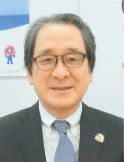
On Oct. 13, 2025, the EXPO 2025 OSAKA, KANSAI, JAPAN concluded its six-month run as a major event that will shape Japan's future international standing. In this Leaders Interview, we spoke with the secretary general of the Expo, Hiroyuki Ishige, about its success and legacy. (Interviewed on Feb. 12, 2026)
Defying Expectations
HaraokaI understand that attendance at the Osaka-Kansai Expo is projected to exceed 29 million visitors, significantly surpassing the approximately 22.05 million visitors at the 2005 Aichi Expo. While initial expectations weren't necessarily high, ultimately it seems to have received international acclaim, wouldn't you agree?
IshigeI believe the expectations about the Expo 2025 Osaka, Kansai, Japan, before its opening, particularly in the Japanese domestic media, were not high and caused concern among other nations. But as you pointed out, the result was a record attendance of 29.02 million visitors. Among Expos since 2000, excluding the Shanghai Expo which was on a completely different scale, this far exceeded the numbers for Dubai, Milan, Aichi, and Hannover. It surpassed the Dubai Expo by 5 million visitors and significantly exceeded the Aichi Expo's 22.05 million. Furthermore, with no major incidents occurring, participating countries have given it high praise.
HaraokaHow was the preparation environment?
IshigeThe preparation environment was quite challenging. The previous Dubai Expo was postponed by one year due to the Covid-19 pandemic. Normally, the preparation period between Expos is four and a half years, but since Dubai is hot in summer, the event was also scheduled for a half-year later, reducing our preparation period to just three years. Moreover, preparations took place amid a world increasingly divided by events like Russia's invasion of Ukraine and the war in Gaza.
HaraokaIn such a demanding environment, were we able to meet the world's expectations?
IshigeDespite those circumstances, we opened and held the Expo as scheduled. We received high praise for the large number of visitors mentioned earlier, the absence of major accidents, and the fact that we avoided running a deficit. This allowed us to fully meet the expectations of the countries that chose Japan when bidding for the Expo. I believe we also met the expectations not only of those countries that chose Japan, but of countries around the world.
Participating nations also expressed their appreciation after the Expo concluded, stating, "Despite the difficult times, Japan executed the event thoroughly as planned and delivered outcomes." As organizers, we are relieved about this. It means we were able to meet the expectations placed upon Japan.
HaraokaI believe you have made a significant contribution to enhancing Japan's presence in the international community. What are your thoughts?
IshigeRegarding Expo diplomacy and business, the number of visiting heads of state, heads of government, and monarchs reached 91, significantly surpassing the 48 who attended the Aichi Expo. I believe exchanges progressed in a very relaxed manner, with mutual visits to each other's pavilions and joint participation in cultural events. It also provided an opportunity to advance diplomacy in a form quite distinct from conventional diplomacy, such as international conferences. Furthermore, business exchanges flourished during the Expo. I believe hosting this event greatly contributed to enhancing Japan's presence within the international community.
Legacy of the Expo
HaraokaThe economic ripple effect was also quite substantial, amounting to approximately 3.6 trillion yen. I believe this represents about 0.6% of Japan's nominal GNP. What do you think?
IshigeThe estimated economic ripple effect figures are as you mentioned. This also significantly exceeds the 2.9 trillion yen figure predicted before the opening. It's said that visitor numbers were higher than anticipated, and the effect of stimulating consumption was greater than expected.
HaraokaBeyond the economic impact from consumption at the Expo site, I believe the indirect effects - such as construction demand driven by infrastructure development - were also significant.
IshigeBeyond effects like increased consumption, it's extremely important that hosting the Expo led to improved transportation access, which in turn advanced infrastructure development. Particularly with the extension of the Osaka Metro's Chuo Line to Yumeshima, the construction of a new station there, the installation of platform doors on all subway platforms, and the introduction of new rolling stock fundamentally improved the quality of transportation services. I believe the effects of these improvements will continue permanently even after the Expo ends.
Regarding subway service, the Osaka Metro's Chuo Line achieved 2.5-minute intervals. Before the Expo, 2.5-minute intervals probably didn't exist; the shortest interval was likely around 3.5 minutes. The effort to make this happen and achieve it gave Osaka Metro a significant boost of confidence in accomplishing something major.
Regarding infrastructure, bridges like the Yumemai Bridge and Konohana Bridge, which provide access from the north side of the Expo site, were widened to accommodate more vehicles. These improvements will also contribute to expanding transportation capacity in the Yumeshima area.
HaraokaBeyond infrastructure, what other effects do you think will remain in the region?
IshigeWhat I just mentioned pertains to the physical infrastructure. But in terms of what will endure more permanently, if I were to pick a few examples - though I don't necessarily think we need to limit ourselves to things that remain in the region - above all else, the immense confidence and pride gained from successfully hosting the Expo during such a difficult period must be profound for the Japanese people, and especially for the people of Osaka and the Kansai region.
One other thing confirmed by hosting this Expo is that while some had argued before the opening that Expos were outdated or perhaps "over-the-hill", both visitors and participants were able to recognize the real value Expos hold. This served as a tremendous encouragement for those who will be involved with Expos going forward.
Furthermore, I'd like to touch on the value of a participatory Expo, its value as an Expo that creates connections. We've always said it's "an Expo created by everyone, for everyone". Symbolizing this, visitors initially felt like mere spectators, but as the event progressed, participants increasingly became involved in the Expo itself, helping to energize it and making it their own.
Organizing an Expo involves an enormous number of stakeholders. I feel these stakeholders themselves shifted from merely telling the Association "this is how it should be done" to taking initiative in Expo organization, actively shaping the Expo in their own vision. Live events are popular everywhere now, but I believe people go there because they want to share an experience, to enjoy something together. I think we confirmed that the Expo was the ultimate embodiment of this.
HaraokaI believe the Osaka-Kansai Expo was designed as " A laboratory for future society", with various cutting-edge technologies demonstrated and implemented throughout the venue. Specifically, what kinds of technologies can be cited?
IshigeAs you mentioned, I think this served as an opportunity for social experimentation and implementation of new technologies. Specifically, we installed perovskite solar cells on the roof of the West Gate transportation terminal and other locations, demonstrating their practical applicability. Since these solar cells can be used on curved surfaces, I think this could be a catalyst for their widespread adoption. Additionally, there is a technology called methanation, developed primarily by Osaka Gas, which mixes CO2 and hydrogen to create a single energy fuel. This was demonstrated at a facility called the Carbon Recycling Factory, where the fuel was used as energy in the kitchen of the Guest House.
Moreover, for direct CO2 capture, a new technology called Direct Air Capture (DAC) is being developed primarily by the Research Institute of Innovative Technology for the Earth (RITE). We also conducted social experiments and implemented innovative technologies such as hydrogen fuel cell ships powered by a hybrid system combining electricity generated by fuel cells and plug-in power, and charging infrastructure for operating large fleets of EV buses.
I think the Advanced Air Mobility and heart models using iPS cells also heightened expectations over how these technologies might develop in the future.
HaraokaCould this also be seen as contributing to the development of future talent?
IshigeThis Expo is expected to have been an opportunity for nurturing diverse talent. Just as the 1970 Expo produced individuals who later became top leaders, this time too we selected many young people in fields like architecture, design, and contents creation to play active roles. I believe these young people will grow into top leaders in the future.
On the visitor side, many elementary and junior high school students have attended. We certainly hope this experience will spark aspirations for their future careers.
Impact on Tourism
HaraokaAs you know, inbound tourism is said to be having a very positive impact on the Japanese economy right now. I suspect this Expo contributed to boosting tourism throughout the Kansai region, but did it also have a positive long-term effect on tourism? What are your thoughts on that?
IshigeOf course, during this Expo period we've seen an increase in inbound visitors to the Kansai region, especially Osaka. Beyond just seeing the Expo itself, over 550 municipalities from Hokkaido to Okinawa participated in exhibition events within the Expo grounds. They showcased the appeal of their local food, traditions, industrial culture, nature, and environment. It became an opportunity for people to learn about Japan's various regions, and I believe this served as a catalyst for people to think, "I want to go there now."
I've heard that staff members visiting from participating countries traveled extensively throughout Japan. If these individuals share their firsthand experiences with friends and others, spreading the word, it will help convey that Osaka, Kansai, and indeed all of Japan are full of fascinating places.
For example, Tottori Prefecture proposed the "Sand Alliance", a collaboration between pavilions sparked by a "sand" exhibit, leading to partnerships with seven countries, including Jordan. Additionally, while Noto suffered devastating damage from the earthquake, we displayed the surviving large Wajima-nuri lacquered globe ("Earth at Night") within the venue. This serves as a symbolic emblem of Noto's earthquake recovery, and we hope it will help attract visitors to the Noto region.
Also, we must not forget that many staff members and their families and relatives visited Japan for the Expo and participated in sightseeing. I think the Expo has clearly heightened international interest in Japan, which should lead to expanded tourism. Particularly since Japan is part of Asia, we should consider focusing on attracting tourists from Asia.
High Satisfaction Levels
HaraokaWith satisfaction levels exceeding 70%, what were the major factors contributing to this success? Also, I understand the repeat rate was exceptionally high, so what were the reasons for that?
IshigeI always say there are three main reasons why our customer base grew. First, the overwhelming appeal of our content. Second, the effort to make daily improvements, which allowed us to see tangible progress. And third, I think the significant incentive was deepening our connections with many international visitors, including our foreign staff.
HaraokaPlease introduce some of your most compelling content.
IshigeWhen it comes to overwhelmingly captivating content, the Grand Ring at the venue was undoubtedly the most compelling. Even visitors who couldn't get into the pavilions climbed up to the Grand Ring. Seeing the pavilions from around the world nestled inside its structure, I believe they could sense the message - "Unity in Diversity" - even amidst talk of a divided world.
The architecture, exhibits, and events of the international pavilions were a major draw of the Expo, and I felt visitors were deeply captivated by them. Related to this, events ran every day for the 184 days. National Days and Special Days, in particular, proved extremely popular. Looking back at the crowds at National Days during previous Expos, even the organizers didn't initially have such high expectations for them this time, but they were a huge hit.
Perhaps reflecting the Japanese people's strong curiosity, the overseas pavilions and National Day content were exceptionally compelling, drawing large crowds.
The Signature Pavilion, encompassing architecture, exhibits, and events, directly addressed the theme "Designing Future Society for Our Lives", particularly focusing on the core concept of "life". It posed fundamental questions like "What is life?" and "How do we think about life?" through its displays. Reactions from visitors, such as "It made me think", suggest it became a highly compelling exhibit. The Japan Pavilion, the Osaka Healthcare Pavilion, the Kansai Pavilion, and the pavilions of the 13 companies and organizations participating as non-official participants were also innovative.
We put a lot of thought into attracting more nighttime visitors, so we operated nightly water shows and drone shows every day. Fireworks also greatly enhanced visitor satisfaction. I believe these elements were key to drawing in visitors.
We established theme weeks for participants to engage with. For example, sessions like "Let's Think About Well-being" or "Peace and Human Rights Diplomacy" addressed themes less commonly tackled by past Expos. We invited representatives from the Nihon Hidankyo (Japan Confederation of A-and H-Bomb Sufferers Organizations), and these initiatives received significant media coverage.
In this way, content that blends enjoyable, surprising, and educational elements is extremely important, and I feel we have successfully achieved this.
HaraokaYou mentioned daily improvements. Specifically, what points did you prioritize in your efforts?
IshigeWhile we strive for daily improvement, we continuously make adjustments based on feedback from our visitors. A particularly new initiative for this Expo was the introduction of a reservation system for visitors, implemented electronically, due to the limited venue space and transportation capacity. This initiative itself drew initial reactions like, "Why are we doing something this difficult?" However, implementing it created an environment where we could more easily gather concrete feedback from customers. And we asked every visitor to send us their impressions and evaluations each and every time.
We collected these impressions as text input, gathering a total of 1.2 million responses. This averaged about 7,000 messages per day. Reading them all manually would have been overwhelming, so we used AI to analyze the trends. We reported these findings immediately to our daily operational meetings. We cross-referenced them with various reports from the field and made quick fixes wherever possible. As a result, visitors began giving feedback like, "They actually fixed what I mentioned" and "This doesn't feel like typical bureaucratic work."
This was our daily improvement mechanism. While the Aichi Expo also emphasized daily improvement, using such electronic tools as the core for improvement was, I believe, a completely new approach for an Expo. This significantly reduced visitor stress. While the Expo offered extraordinary experiences, it also presented various stresses. Stress from everyday actions is particularly unpleasant, so reducing it was crucial, and we tackled this head-on.
HaraokaI believe one of the attractions was the opportunity to interact with many people from overseas. What do you think?
IshigeAt the Expo, the major appeal was the direct interaction with people from other countries. Many visitors specifically noted how kind the foreign staff were. In particular, this time was different from the 1970 Osaka Expo or the 2005 Aichi Expo. Foreigners visiting from overseas or residing in Japan were employed at the pavilions and spoke extremely fluent Japanese. This level of interaction wasn't seen to this extent at the 1970 Osaka Expo, let alone the 2005 Aichi Expo. Such direct exchanges with international visitors proved highly appealing to attendees. The high repeat visit rate stemmed from the reasons I just mentioned. In fact, around 75% of respondents in our survey expressed a desire to return, and nearly half of those actually did come back.
HaraokaIt has been pointed out that social media played a significant role in the high repeat rate. What are your thoughts on this?
IshigeRegarding assessment on social media, I believe this Expo was truly one of the social media era. Back in 2005 for the Aichi Expo, social media didn't play such a significant role, and neither Dubai nor Milan gave the impression that social media greatly shaped their environments. This time, however, social media overwhelmingly shaped the Expo environment itself. Assessments were made there, and that created a major momentum.
From my perspective, the turning points that dramatically changed the Expo's reputation were the 100,000-person test run just before opening and the "Media Day" for journalists. When we encouraged them to freely share and report their impressions, we saw evaluations emerge on SNS saying, "What we're seeing is completely different from what we'd heard or expected."
Through SNS, ordinary people also became more directly involved with the Expo. For example, there was an unofficial map created by a visitor called "Tsuji-san's Map". This kind of movement was unprecedented in past Expos. This trend of a "collectively created, collective Expo", an Expo where everyone participates, probably wouldn't have emerged without the SNS environment.
HaraokaThank you very much for your valuable insights.
Written and translated by Naoyuki Haraoka, editor-in-chief of Japan SPOTLIGHT, with the cooperation of Tape Rewrite Co.