Can cooperation between the Global South and Japan contribute to the world?
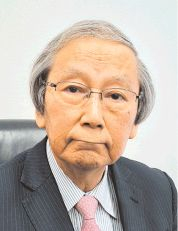
By Masakazu Toyoda
My answer is, of course, yes.
For sure, such cooperation would contribute to the world, despite Japan's relative decline in world economic power over of the last few decades. For example, using real GDP (in USD), Japan ranked second power after the United States in 1990. Moreover, at that time, the US GDP was roughly twice that of Japan. By 2025, the US remains first with China second and Japan third. The US GDP is now five times larger than Japan's GDP.
Despite its decline in world economic power, the perception of trust towards Japan to "do the right thing" for Southeast Asia, according to the Yusof Ishak Institute (ISEAS), has been rising and remained high for the past seven years. ASEAN experts ranked Japan as the most trusted country or regional bloc. Notably, in the 2025 survey, 67% of the respondents considered Japan as a trustworthy nation while only 17% expressed distrust. Comparing the trust/distrust levels for other major countries, the European Union (EU) ranks second at 52/28%, followed by the United States at 47/33%, China at 37/41%, and India at 35/36%.
The reasons for trusting Japan, in order of importance, include: "A responsible stakeholder that complies with and upholds international law", "Possesses the economic strength and will to exercise global leadership", and "Respect Japan and admire its civilization and culture". Furthermore, as "a country people want to visit on vacation," Japan ranked first at 30%, with ASEAN second at 16%, and South Korea third at 10%.
Unfortunately, a high level of trust does not necessarily translate into an assessment of high influence which would be related to economic power. In Southeast Asia, the perceived distribution of influence is as follows. China holds the highest perceived level of influence at 56%, followed by the United States at 15% and ASEAN also at 15%. Japan's perceived level of economic influence is estimated at only 6%. How can we relate being highly trustworthy while poorly influential from an economic perspective? To answer that we need to look at the three main points/issues raised in the roundtable discussion.
The first was the rebuilding of a rules-based economic order.
The second was about balancing climate change measures and energy security.
The third was about high-quality aid, not quantity.
From this, it is obvious that the expectations of the Global South nations (or at least the people in Asia), and the reasons why Japan is trustworthy, coincidentally align.
The First issue addresses the current state of the rules-based international order, and Canadian Prime Minister Carney's speech at Davos clearly stated and summarized the current situation: "The multilateral institutions on which the middle powers have relied - the WTO, the UN, the COP - the architecture, the very architecture of collective problem solving are under threat." For middle powers, however, this statement is nothing but adding to the confusion. For the past two years or so, quite a few people including me have been arguing that CPTPP countries and the EU need to cooperate to rebuild a rules-based international order. Discussions on such a move are gradually beginning on a private sector basis. In this case, the countries of the Global South face the same problems as the Middle Powers and cooperation between the two would be more than desirable. As mentioned earlier, if Japan is trusted despite its limited economic influence, it should be possible for Japan to play a bridging role between the Middle Powers and the Global South as one of the leading countries in this movement. As Prime Minister Carney said earlier, "Countries, especially intermediate powers like Canada, are not powerless.... The power of the less powerful starts with honesty." Influence is created through the cooperation of many honest and trustworthy countries.
The Second point calls for realistic climate change countermeasures. Some countries are beginning to lessen the importance of climate change at the expense of seeking economic growth. Over the past decade or so, there has been a tendency to forget about energy security and to pursue unrealistic energy and environmental policies. For developing countries, however, cheap and stable energy is essential and economic growth crucial. The key is to balance climate change measures with energy security policies. Japan has not given up on decarbonization by 2050, but many people in Japan have argued that it is unrealistic to force developing countries to do the same. Here too, the trust placed in Japan by the Global South is a valuable sign that Japan can serve as a bridge.
The Third point stresses the need for high-quality aid rather than quantity, often in the form of financial aid. What the Global South likely currently seeks from Japan is precisely this high-quality assistance. In the past, Japan provided its support through infrastructure development, industrial investment, and human resource training. Around 1990, ASEAN's GDP was one-tenth of Japan's and now, thirty five years later, ASEAN's GDP is poised to surpass Japan's. Japan can no longer provide the same kind and level of quantitative support to other Global South regions like Africa and Latin America as it did earlier to Asia. However, it is prepared to share its qualitative development know-how, primarily centered on human resource development.
I am confident that cooperation between the Global South and Japan to address issues such as the rule of law, climate change, energy security and foreign aid would not only contribute to the region, but also contribute to the world.
Masakazu Toyoda is chairman and CEO of the Japan Economic Foundation (JEF). He previously served as chairman and CEO of the Institute of Energy Economics, Japan, after having been vice minister for International Affairs at the Ministry of Economy, Trade and Industry.