Expanding Medical Tourism to Japan for the Mutual Benefit of Japan and the World
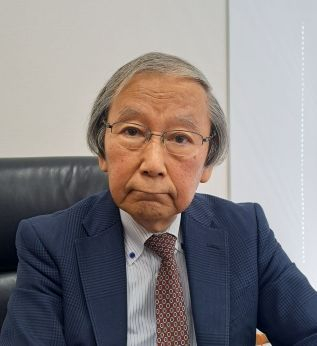
By Masakazu Toyoda
According to the Japan National Tourism Organization, the number of foreign visitors to Japan in the first half of 2025 reached 21.5 million, surpassing the 20 million mark for the first time. Of course, the weak yen is contributing to this increased attraction. If the trend continues, the total for 2025 could exceed 40 million for the first time.
Meanwhile, the number of foreigners visiting and seeking specific medical services in Japan (a form of medical tourism that is gaining global attention) is considered extremely low relative to other Asian countries. According to the 2023 interim results of the Ministry of Economy, Trade and Industry's "Study Group on Appropriate Promotion of Medical Inbound Tourism," Thailand attracted roughly 3 million medical travelers, Singapore 500,000, Malaysia more than 800,000, and South Korea 600,000. The number for Japan was estimated at between 20,000 and 30,000 only.
Thailand recorded 28.2 million foreign visitors in 2023, ranking 11th globally (Source: Eleminist). According to the same statistics for the same year, Japan ranked 15th with close to the same amount of foreign tourists (25.1 million). Approximately 10% of the total for Thailand is considered medical tourists, while for Japan, the ratio is only about 0.1% of foreign tourists - one-hundredth of Thailand's ratio.
According to the Lancet's Healthcare Access and Quality (HAQ) Index (2018), recognized by major medical journals, Japan ranks 12th internationally for its medical services and second among the G7 nations. The top "international" positions are held by small European countries such as Iceland, Norway, and the Netherlands, and Italy is first among the G7 countries. It is interesting to note that a long-life expectancy must reflect high standards of medical care. Based on the WHO data, Japan's 2025 life expectancy is the highest among 185 countries, with an average of 84.6 years for both men and women. The global average is only 71.4 years, a significant gap exceeding 10 years. Japan must be doing something right!
So why hasn't medical tourism progressed in Japan?
The first possible reason is that, amid a growing population, there were not enough beds available for foreign patients. When medical beds are scarce, prioritizing Japanese patients seems natural. However, as Japan's population has been steadily declining since 2011 and despite an aging population, the number of unoccupied hospital beds has become relatively more abundant, resulting in an increasing number of hospitals struggling for profitability. This is signaling a major shift in the landscape.
Second, the development of companies and/or institutions to support medical tourism, so called one stop service, has been practically nonexistent. For example, those companies and/or institutions should recognize which hospitals have the capacity for more patients, recommend the appropriate medical institution, and negotiate on its behalf. Their services must also include interpretation as well as the ability to provide travel arrangements (visas, hotels, airline tickets).
Many of these functions cannot currently be provided directly by the medical institutions because of delays in strategic support from the Japanese government. Many years ago, Thailand formulated a "Strategic Plans of Developing Thailand as an International Medical Hub 2017-2026," and it agreed to a specific national strategy to promote medical tourism. In Singapore, the government-led medical tourism promotion strategy "Singapore Medicine" was launched in 2003 through a close collaboration between the Economic Development Board (EDB) and IE Singapore. Their strategy included an annual target of one million foreign patients by 2012. The Malaysia Healthcare Travel Council (MHTC) functions as a central coordinating body supported by many medical institutions. Those institutions have assigned international marketing personnel and are promoting activities in collaboration with the MHTC. South Korea is pursuing a rapid expansion of its medical tourism under the "Medical Korea" initiative.
Amidst all this, Japan has only recently begun developing its "Japan Way" policy, based on its own system while improving from the good practices of other countries with Japanese methods. The "Japan Way", is developed in cooperation between the Ministry of Health, Labour and Welfare and the Ministry of Economy, Trade and Industry.
Fundamentally, medical tourism is driven by demand from foreign patients seeking "better treatment," "more affordable treatment," and the desire to "enjoy tourism during recovery or while awaiting diagnosis results." For medical institutions, it ensures the necessary investment to introduce new medical technologies and equipment amid a declining number of domestic patients. It is, in essence, mutually beneficial.
It is hoped that activities promoting Japanese healthcare will contribute to building a healthier Asia and, ultimately, a healthier world.
Masakazu Toyoda is chairman and CEO of the Japan Economic Foundation (JEF). He previously served as chairman and CEO of the Institute of Energy Economics, Japan, after having been vice minister for International Affairs at the Ministry of Economy, Trade and Industry.