Geopolitics & AI Challenge Global Order & Growth
- Release date :
- Publisher's Note
Prime Minister Sanae Takaichi started her policy speech at the Diet on Oct. 5, 2026 with the following remark: "The world is now in the midst of a transformation of the international order. Countries are competing with massive, long-term industrial policies, and inter-state competition over advanced technology, human resources, and investment is intensifying more than ever before."
While there may be various opinions on the economic policies of the Takaichi Cabinet, I believe many people would agree with this initial assessment of the current situation.
The postwar Bretton Woods system, established under the leadership of the United States, is currently facing a major turning point. The rules-based free trade system is now being challenged by various countries. Some of the international organizations founded after World War II are also facing challenges from major powers. Actions backed by force by highly influential nations have become frequent, and there are even rising concerns that the international community may be turning into a place ruled by the law of the jungle.
In early October, the Financial Times published an article titled "The New Great Game", comparing the September US-China summit in Washington and recent bilateral relations to the 19th-20th-century geopolitical rivalry between the British Empire and Imperial Russia. This historical "Great Game" spanned approximately a century of conflict between the two empires over a vast region that included Afghanistan, Central Asia and the Caucasus, drawing in numerous surrounding nations. The article pointed out that the postwar international order established under American leadership has begun to transform significantly within an international political and economic landscape confronted by new geopolitical dynamics, including the expansion of China's national power.
Since the 1980s, neoliberal policies have driven the growth of a global trade and investment system focused on deregulation, free trade, and market forces. Today, however, this system is also facing strong pressure to change.
Another major factor disrupting the global order recently is the emergence of generative AI and the rapid development of artificial intelligence. It is analyzed that within the next few years, many occupations will be replaced by AI, drastically transforming global finance, trade, investment systems, and people's daily lives. Concerns about AI-driven cybersecurity threads have also materialized. Eventually, this impact is expected to extend to international trade and the global economic order.
How should we handle this situation?
For the development of the economy, trade, and investment, it is essential for companies to continue their active operations. For enterprises, crucial elements are whether they can secure a certain level of predictability regarding the future and whether their free business activities are guaranteed. In this respect, maintaining a rules-based framework for free trade and investment is necessary.
Following her initial assessment of the current situation in her Diet speech, Prime Minister Takaichi continued: "Japan ... will resolutely defend a free and open international order based on the rule of law, ... and will boldly advance 'crisis management investment' ... and 'growth investment'. By doing so, we will realize robust and sustainable economic growth."
No matter what geopolitical changes occur, continued investment in growth by every nation remains essential for global economic development. The key will be driving new investments through the advancement of science and technology and the pursuit of innovation. The traditional belief in neoliberal deregulation and keeping governments out of the market has shifted. Today, countries are actively competing in industrial promotion, backed by massive government subsidies and incentives.
In an environment of rapid AI development, the driving forces of economic growth may take a different form than before. Furthermore, the development and widespread adoption of AI are expected to reshape the global economy, trade, and even political frameworks.
We might be at the very forefront of creating a new framework for trade, the economy, and global politics, facing new challenges like geopolitical changes and the rise and spread of AI. To build a peaceful and prosperous world and an inclusive society instead of a divided one, each of us must take action with the awareness that our individual efforts will contribute to forging this new framework as we confront the challenges before us.
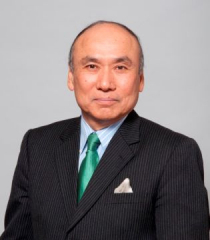
Okada became chairman & CEO of the Japan Economic Foundation (JEF) in July 2026. Previously, he was president & CEO of Japan Petroleum Exploration Co. Ltd., executive senior vice president of NEC, and vice minister for international affairs at the Ministry of Economy, Trade and Industry. He also served as executive assistant to Prime Minister Junichiro Koizumi.