
Roundtable on Building a Strong & Prosperous Japan Through Technological Innovation & Industrial Policy (Oct. 6, 2026)
- Release date :
- Roundtable
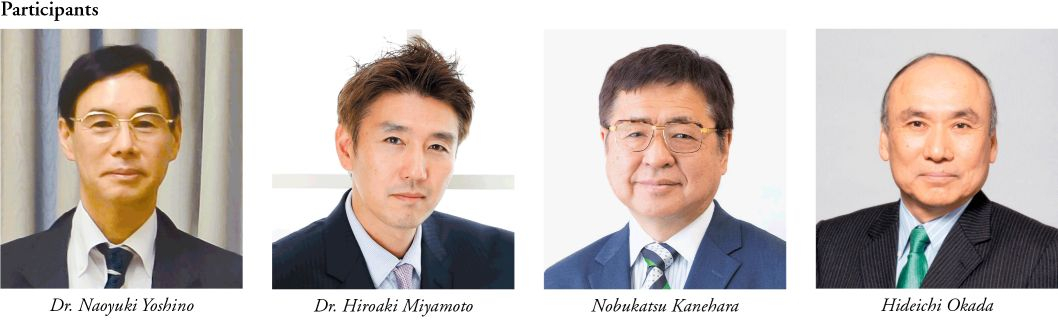
Participants:
Participants: Dr. Naoyuki Yoshino, emeritus professor, Keio University / specially appointed professor, Tokyo Metropolitan University
Dr. Hiroaki Miyamoto, professor, Institute of Economic Research, Hitotsubashi University
Nobukatsu Kanehara, executive director of the Sasakawa Peace Foundation
Moderator: Hideichi Okada, chairman & CEO, Japan Economic Foundation (JEF)
Abstract of Discussion
• Adapting to an aging society and emerging technologies such as digital transformation (DX), AI, and robotics; developing a national grand design; and implementing reforms in labor markets, business processes, organizational structures, and education across both the public and private sectors are essential to enhancing Japan's productivity and prosperity.
• AI and DX can enable older people to remain in the workforce, while fostering complementary roles for younger and older workers can enhance Japan's productivity.
• As the importance of national security grows amid an increasingly complex geopolitical environment, Japan should mobilize the collective capabilities of the entire nation - including the government, industry, financial sector, and academia - to strengthen national security.
• It is essential for Japan to integrate its science and technology policies with its national security policies and pursue strategic support and industrial policies, including R&D subsidies and government procurement, to promote the development of dual-use technologies such as AI and drones that support national security.
Introduction
OkadaToday, Russia's invasion of Ukraine, the US and Israeli attacks on Iran, and economic coercion by certain countries are contributing to the fragmentation of global supply chains and posing threats to the stable supply of energy, food, and critical minerals. At the same time, global challenges such as addressing climate change, transitioning to a circular economy, and navigating the digital and AI revolutions are becoming increasingly pressing. Japan must respond to these challenges in an appropriate and effective manner.
These threats and challenges cannot be adequately addressed through the efforts of individual companies alone. They are, in essence, public-interest and strategic issues. In response, many countries are now pursuing a new form of industrial policy, leveraging massive public spending, robust tax incentives, and financial measures to promote their national economies and industries, strengthen economic security, and advance green transformation (GX) and resource circularity.
Since the 1980s, confidence in market mechanisms has grown, and neoliberal thinking has become mainstream worldwide amid the spread of liberalization and deregulation. Against this backdrop, industrial policy - whereby governments selectively support specific industries or technologies - has tended to be viewed critically on the grounds that it creates inefficiencies, distorts competition, and delays adaptation to technological change.
However, this perception is changing today, and industrial policy is increasingly being reassessed in analyses by various international organizations and in academic circles. The United States and the European Union are also implementing strong government support measures to enhance the competitiveness of their domestic industries, as exemplified by the US CHIPS Act, the EU's Draghi Report, and the proposed European Competitiveness Fund. China, for its part, has been actively pursuing strong support for its domestic industries since the introduction of "Made in China 2025" in 2015.
Under the administration of Prime Minister Sanae Takaichi, Japan has formulated the Japan Growth Strategy with the aim of transitioning to a "growth-oriented economy." The strategy calls for promoting more than ¥370 trillion in public- and private-sector investment by fiscal 2040 across 17 strategic sectors, including AI and semiconductors.
In the opening of her policy speech to the Diet on Oct. 5, Takaichi emphasized the need for Japan to pursue bold growth-oriented investment, stating: "The world is now amid a transformation of the international order. Countries are competing with one another through massive, long-term industrial policies, and competition among nations for advanced technologies, human resources, and investment is intensifying to an unprecedented degree."
Against this backdrop, this roundtable will focus on the theme of "Technological Innovation and Industrial Policy" to explore ways to promote the development and growth of industry and the economy in today's world.
In 2022, the Japan Economic Foundation (JEF) put forward Recommendations for an Evolutionary Industrial Policy to Achieve Broad Economic Security in its broad sense. The proposal was motivated by the question of how Japan could maintain and enhance its national power in response to the country's prolonged economic stagnation following the collapse of the bubble economy, growing geopolitical uncertainty stemming from tensions between the US and China, and a deteriorating security environment.
In this roundtable, I would like to invite experts to discuss how Japan should pursue "technological innovation and industrial policy" amid the complex international environment and geopolitical changes surrounding Japan. We are joined by Dr. Naoyuki Yoshino of Keio University and Dr. Hiroaki Miyamoto of Hitotsubashi University, both of whom participated in our policy proposal four years ago, as well as Nobukatsu Kanehara of the Sasakawa Peace Foundation, who is an expert on technological innovation and industrial policy from a national security perspective.
Proposal for Advanced Industrial Policy & Japan's Current Situation
OkadaTo begin, as I mentioned earlier, four years ago, with the support of Dr. Yoshino and Dr. Miyamoto, we prepared a policy proposal entitled "The Need for an Evolved Industrial Policy to Achieve Economic Security in Its Broad Sense". I would like to ask doctors Yoshino and Miyamoto how you have interpreted and responded to the proposal's underlying objectives and recommendations since its publication, and how your research in this field has progressed over the past four years. To start, I would like to invite Dr. Yoshino to share his views.
YoshinoJapan is now embarking on a new industrial policy through what is known as proactive fiscal policy. Broadly speaking, I would identify three types of fiscal measures used to implement industrial policy. The first is subsidy-based support; the second involves public works and the development of various types of infrastructure; and the third, which we will discuss today, focuses on technological innovation, research and development (R&D), and productivity improvement.
Our research conducted jointly with Dr. Miyamoto, who is also participating in today's event, found that the third type of technological innovation - in particular, industrial policies aimed at promoting technological innovations that have an impact across Japan's entire industrial sector - is the most effective form of industrial policy. Such policies are crucial to boosting Japan's overall economy.
Furthermore, since we proposed an "evolved industrial policy" four years ago, we have seen tremendous advances in AI-driven digitalization over the past two to three years. In this regard, I think it is extremely important for both the private sector and the government in Japan today to leverage AI and DX to improve the efficiency and effectiveness of internal corporate operations and government policymaking. For example, various regulations and standards have traditionally governed industries, but we may need to fundamentally restructure them. If we maintain the status quo, these regulations and standards could become obstacles just as private companies pursue new initiatives.
In this sense, I believe that the developments brought about by AI and DX over the past two to three years represent a major industrial revolution that is transforming society as a whole, much as the advent of the locomotive and, later, the Internet brought about industrial revolutions in the past.
Against this backdrop, unless both the private sector and the government can adapt effectively to these changes in industrial structures, we will increasingly find that regulations and institutional frameworks based on conventional ways of thinking no longer suit the new realities.
Fundamentally restructuring these systems is extremely challenging. Excessive deregulation could create problems, but overly stringent regulations could stifle the very initiatives private companies are trying to pursue. What matters most is for the government to respond positively and flexibly. It may also be necessary to reconsider the organizational structures of individual government ministries, which have traditionally been divided along sectoral lines. In this regard, I believe that both the public and private sectors need to undertake major organizational reforms and establish new institutional frameworks.
Next, Japan faces an aging population, which has driven social security spending to its largest share of government expenditure, accounting for as much as one-third of the total. As a result, the government has less fiscal capacity to allocate sufficient resources to other priorities, such as technological innovation and education. In this regard, I believe that DX, including the use of AI and robotics, could create opportunities for people over the age of 60 to continue contributing to society for as long as possible. This, in turn, could help Japan revitalize its economy and society despite its aging population.
Another important point is that older workers must not crowd out younger generations. Instead, younger and older people should work together in a mutually complementary way, strengthening both businesses and the government. For example, Japan has recently been showing signs of a bubble-like economic boom, reminiscent of the past. However, younger generations have no firsthand experience of that era's bubble economy. I think those who experienced the bubble can complement younger generations' knowledge and skills by sharing advice based on their past experiences, helping society move in a more positive direction.
To summarize, I believe that three things are particularly important. First, both the private sector and the government need to respond appropriately to the changes brought about by AI and DX, including by adapting internal corporate structures and government policymaking. Second, in an aging society, we need to use DX, AI, and robotics to help older people keep working and contributing to society. Third, by bringing younger and older generations together in a complementary relationship - learning from past experiences while looking ahead and working toward the future - we can enhance Japan's productivity. I think these three elements are essential to Japan's future growth.
OkadaThank you very much for your insightful remarks. You have highlighted three important points. You mentioned that younger generations have not experienced the bubble economy. I would add that, in a similar sense, many young people are also unfamiliar with a world in which interest rates are a normal part of the economic environment. Now that Japan is returning to a world with positive interest rates, I think the experience of older generations could be particularly valuable to younger people. Now, Dr. Miyamoto, may I ask for your thoughts?
MiyamotoFirst, let me briefly summarize the discussions at the previous study group on evolved industrial policy.
As I understand it, the fundamental concern underlying our discussions was that wages in Japan had been declining over an extended period, symbolizing a broader decline in the country's economic strength. Against this backdrop, we argued that industrial policy should aim to achieve productivity gains and economic growth through indirect intervention, with a focus on designing and establishing appropriate incentives while respecting the autonomy of private companies.
In particular, I believe it is essential to create a competitive market environment, and that a key to achieving this is to promote greater economic dynamism and turnover. I recall that one of the central pillars of our recommendations was that Japan's future economic development would depend on promoting new market entry, reforming regulations that protect vested interests, and even renewing the political system.
Japan's national economic strength had declined over the preceding three decades, a period widely referred to as the "Lost Three Decades". We emphasized the need to identify the root causes of this decline, develop a long-term grand design spanning several decades, and pursue it as a national strategy. We also stressed the importance of halting the Japanese economy's downward trajectory and putting it back on a path of growth. I have reread our previous report in preparation for today, and I was struck by how relevant its contents remain: it could be published today without seeming out of place. If anything, I feel that its message carries even greater weight in the current context.
While I find this encouraging, it also suggests that policies and the way society operates have not changed all that significantly over the past several years. Therefore, building on our previous recommendations, I think we need to substantially accelerate our efforts going forward.
I would now like to address several specific issues. First, let me turn to fiscal policy, which Dr. Yoshino also touched on. We discussed fiscal sustainability in our previous report, but the economic environment has changed significantly between 2022 and today. As Chairman Okada mentioned earlier, Japan is now experiencing inflation and has returned to a world with positive interest rates. When we held our previous discussions, I do not think we had yet entered such an environment. In a world with positive interest rates, however, we need to pay particular attention to fiscal sustainability.
The Takaichi administration has advocated what it calls "responsible proactive fiscal policy", with one of its fiscal sustainability objectives being to reduce the debt-to-GDP ratio. At present, the ratio has declined somewhat from its peak.
However, this decline is largely attributable to inflation. Even according to the Cabinet Office's analysis, under the baseline scenario, the debt-to-GDP ratio could well begin rising again around the mid-2030s. Of course, the outlook would differ if the economy grew. Taking a conservative view, however, fiscal sustainability may appear to be improving in the short term, but the situation warrants considerable attention over the medium to long term. I believe that fiscal policy will be one of the major issues to consider as we formulate various policies going forward.
Next, let me turn to labor market reform. As a labor economist, I identified labor market reform as a key priority in our previous recommendations. As Dr. Yoshino mentioned earlier, with the emergence of AI as a new technology, I think we are at a turning point that calls for fundamental changes in how people work, how they are employed, and, more broadly, how the labor market itself is structured.
It is essential to establish a more flexible labor market. However, simply reforming the labor market is not enough. We also need to fundamentally rethink human resource management, including wage-setting and performance evaluation systems. I think the advent of the AI era has made the need for these reforms even more pressing.
I would like to raise two additional points. The first is evidence-based policymaking (EBPM). We highlighted its importance at our previous study group, and over the past several years, EBPM has become much more firmly established within the government. In fact, an expert panel on EBPM has been established under the Government Tax Commission, and efforts are underway to ensure that various policy issues are discussed and examined on an evidence basis. I believe this is a very welcome development.
The second issue concerns the civil service. We previously emphasized that Japan is supported by the highly talented people working in Kasumigaseki, the center of national government, and that it is essential to ensure that the government continues to attract and retain highly capable personnel.
For example, I think we discussed the need to establish pay systems that reward ability rather than rely solely on seniority, ensure that highly capable civil servants receive salaries competitive with those in the private sector, reconsider the vertically segmented administrative structure, and make it easier to recruit mid-career professionals and rehire those who have left the civil service.
These issues remain just as relevant to Kasumigaseki today. As Dr. Yoshino mentioned earlier, in the age of AI it may be necessary to rethink the structure and organization of government ministries. I believe that how we reform the civil service and the broader government administrative system remains a crucial issue.
OkadaThank you very much. As you pointed out, even when we revisit the recommendations made four years ago, there may be very little that needs to be revised. This is a testament to the quality of those recommendations, but it also raises the question of why Japan has changed so little since then. You have addressed several important issues, including fiscal policy, labor market reform, evidence-based policymaking, and the future of the civil service and government administration.
National Security, Technological Innovation & Industrial Policy
OkadaNext, I would like to turn to Mr. Kanehara. I understand that, considering changes in the security environment, you believe that from the perspective of national security Japan should strategically support research and development in foundational science and technology by linking science and technology policy with security policy. I have also heard you suggest that, in addition to providing subsidies to support R&D, the government could leverage procurement by government agencies as a means of promoting R&D. I would very much appreciate hearing your views on these issues.
KaneharaAs Chairman Okada mentioned earlier, looking back today, the 1990s were a period of somewhat extraordinary idealism. The Soviet Union had collapsed, and Russia had joined the G8, effectively becoming part of the Western camp. China, whose economy was far smaller than it is today, had been at odds with the Soviet Union ever since the split between Mao Zedong and Nikita Khrushchev in the 1950s. Moreover, China had engaged in an armed conflict with the Soviet Union over Damansky Island in 1969. As a result, China had aligned itself with the West. In this context, it seemed that there were no enemies left.
The idea that economic considerations alone should guide policy, and that liberalism and market orientation should be the way forward, became widespread. Japan went along with this trend, abandoning subsidies and embracing liberalism and market principles, and worked hard to compete under this new approach. But what was distinctive about Japan was that national security and science and technology and industrial technology became disconnected from one another. As a result, Japan's technological capabilities weakened.
The national security sector, however, had been kept separate from the WTO framework, and there was a firmly established understanding that national security was not subject to market principles. In the US, of a science and technology budget of around ¥20 trillion, the Pentagon accounts for half. There are many excellent public- and private-sector research institutions, and they receive contracts from the Pentagon for roughly half of their research projects. This is considered entirely normal. The reason is that there is a fundamental philosophy that science and technology are what underpin the nation and its national defense.
Japan has lacked this philosophy since the end of World War II. In that sense, I believe it is only natural that Japan has fallen behind in science and technology. In the US, funding that is essentially in the form of subsidies is described as research contracts for national security purposes. This allows enormous amounts of government funding to flow to academia and industry outside the WTO framework.
Turning to the issue of procurement, the US has a system known as GOCO (Government-Owned, Contractor-Operated). Under this arrangement, for example, the US government leases an entire government-owned factory to a private company, which can manufacture weapons without having to invest in the factory's facilities and equipment. This enables the company to generate substantial profits. In 2023, Japan enacted the Act on the Enhancement of Defense Production and Technology Bases to emulate this system, but the measures fell short of what was needed. We are now seeking to put forward a revised proposal on this issue. This illustrates just how far Japan lags internationally in the field of national security.
Warfare today is also undergoing a major transformation. Advanced computing is playing an increasingly important role, and AI, which has been discussed throughout this conversation, is now being integrated into military operations. Unmanned drones are being deployed at the forefront of the battlefield. Human soldiers no longer go to the front lines themselves. In the past, military personnel would exchange information over the telephone, asking questions such as: Where is the enemy? Where are our own forces? Which ammunition from our unit should be sent to which units? And where can we obtain the ammunition we need? It would take a week or two to gather information, coordinate logistics, and prepare using telephones before soldiers could finally be deployed to the battlefield.
Today, AI systems that integrate vast amounts of data to support decision-making are increasingly being used, reducing the time required to make decisions in warfare to mere seconds. Decisions involving target detection, engagement, assessment, and logistics, which once took days, are now being made in seconds. This is known as the acceleration of the kill chain.
I believe that Japan's Self-Defense Forces (SDF) must also find ways to address these emerging domains, including space, AI, and drones. The SDF is making strenuous efforts, but Japan is seriously lagging in AI. Responding effectively to these challenges also requires the development of general-purpose technologies, particularly software. In an era when the SDF cannot operate effectively on its own, the entire Japanese industrial base must be strong enough to support it.
Furthermore, in the emerging world order, the era of idealism has come to an end. We are now seeing economic coercion being used as a tool of diplomacy, with disruptions to rare earth supply chains creating serious difficulties for Japanese industry.
Finally, I would like to make one last point. Since the end of World War II, Japan has pursued an unwaveringly pacifist course, driven by deep remorse over its prewar past. As a result, all sectors of society, including the government, industry, the financial sector, and academia, have turned away from national security. For 80 years, Japan has failed to integrate science and technology with national security.
It was only toward the end of the administration of Prime Minister Shinzo Abe that the government finally began to link science and technology with national security, and industry now seems to be gradually moving in the same direction. Even among companies commonly regarded as defense contractors, defense-related business accounts for only around 10% to 20% of their overall business. Most of these companies are therefore primarily engaged in civilian markets, making their relationships with overseas civilian markets equally important. To encourage industry to change its mindset, I think the government needs to take the lead, sending a clear message that contributing to national security is not something to be ashamed of, and actively supporting industry in this effort.
The financial sector has also been considerably slow to catch up. However, a newspaper recently reported that Mitsubishi UFJ Bank has finally begun shifting its policy toward expanding lending to companies involved in dual-use technologies and national security-related businesses. This is very significant news. Until now, the financial sector had refused to provide any funding to military-related businesses, creating a major obstacle to their development.
Academia has been very reluctant to engage with national security. However, since the administration of Prime Minister Fumio Kishida, efforts have been made to gradually build understanding through the K Program (Economic Security Critical Technologies Development Program). I believe that these efforts are finally beginning to gain traction.
Japan is now many steps behind the rest of the world in integrating national security with science and technology, and I think we must make every effort to catch up. In terms of funding, most scientific and technological advances have dual-use applications, so I think we should strengthen these capabilities by making greater use of budgets allocated to economic security and national security. Furthermore, if Japan is to increase defense spending to 3% of GDP, I think the defense budget should also encompass science and technology funding, as well as related facilities and infrastructure. As I see it, we have entered an era in which the full strength and capabilities of the nation as a whole must be mobilized to support national security.
OkadaThank you very much. Mr. Kanehara has explained the importance of recognizing that science and technology underpin national security, and noted how the US supports the development of defense technologies through procurement and other forms of engagement. In Japan, too, organizations such as the former Japanese National Railways and NTT once played a role in advancing research and development through their procurement activities. But these organizations were privatized, and it may be that the mechanisms through which major public-sector entities or government-affiliated organizations funded R&D have largely disappeared. We need to build a strong defense industrial base.
The same issue arises in industry and finance, but there are also many universities that categorically refuse to engage in R&D related to defense. I am concerned that unless we address these issues, cutting-edge technologies will not be able to spread to defense technology or to broader science and technology.
Industrial & Social Challenges & Government Responses & Policies
OkadaAs our next topic, I would like to discuss the Japanese government's policy measures and responses, the policy responses of industry, and broader societal challenges.
First, I would like to turn to Dr. Miyamoto. As we discussed earlier, you have argued that Japan should do much more to increase labor market mobility to strengthen the competitiveness of Japanese industry and promote the growth of the Japanese economy. In particular, you have emphasized the need for fundamental changes in labor markets and in how work is evaluated in the age of AI and DX. At the same time, looking at the labor force from a somewhat different perspective, Japan is facing severe labor shortages in sectors such as construction, and some have even suggested that these shortages are becoming a bottleneck to economic growth.
As Japan seeks to develop a new industrial policy and achieve economic growth, I would like to hear your thoughts on the key challenges that stand in the way and the directions in which policy and practice need to change.
MiyamotoI believe that labor market reform is extremely important, particularly in promoting labor mobility and making the labor market more fluid. To achieve economic growth, we need to improve productivity. The economy is a living organism: while some sectors and companies decline, others emerge and grow.
The extent to which economic resources - people, capital, and money - can move smoothly from declining sectors to growing ones determines productivity across the economy as a whole, or what we call macroeconomic productivity. If labor mobility is limited, workers remain in declining industries rather than moving into growing ones. This prevents the economy from undergoing the process of renewal and restructuring that it needs, resulting in lower productivity at the macroeconomic level. In this sense, I think labor market reform is critically important.
Furthermore, a more fluid labor market makes it easier to achieve the right match between workers and jobs. This also contributes to productivity improvements at the micro level, that is, at the level of individual firms. I therefore believe that labor market reform can enhance productivity at both the macro and micro levels.
The issue of labor shortages was raised earlier, and in Japan this has become a structural problem. Labor shortages are not simply the result of a strong economy; rather, as the population declines, the available workforce is gradually shrinking, leading to persistent labor shortages. This could become an increasingly serious problem, particularly in the years ahead.
However, Japan still has untapped labor potential in three groups: senior citizens, women, and foreign workers. It is essential to create an environment in which these groups can work more easily and encourage their participation in the workforce.
I am particularly interested in the labor market for older workers. This relates to a point Dr. Yoshino raised earlier. According to a report published by the International Monetary Fund (IMF) in 2025, health scores among older people have improved significantly. Put simply, today's 70-year-olds reportedly have cognitive and health scores that are almost equivalent to those of people in their 50s in the past. In effect, they can be considered to be 20 years younger than their chronological age would suggest. One distinctive feature of Japan is that older people have a very strong desire to continue working. I think it is important to provide an environment in which they can remain motivated and actively engaged in the workforce. This is another reason why greater flexibility in the labor market is essential.
That said, the workforce will continue to shrink over the long term, making investment in labor-saving technologies and automation, including systems that can operate without human intervention, indispensable.
Another issue we need to consider in this context is AI, which has been a major topic of discussion today. With the advent of generative AI, there are concerns that it could take jobs away from people. According to IMF research, generative AI is expected to affect 60% of jobs in advanced economies. But this does not mean that all these jobs will disappear. Half of the jobs affected may offer opportunities to boost productivity by working alongside AI, while the other half face the risk of being replaced by AI. This could lead to lower wages and, in some cases, job losses.
Looking back at past technological innovations, however, we can see that the emergence of new technologies has also created new industries and jobs. In this sense, I believe AI could trigger a major restructuring of the labor market, and that this process has already begun to some extent in parts of the world. As a result, creating an environment in which people can move flexibly between jobs will become increasingly important. Japan therefore needs to press ahead with labor market reform.
One further point I would like to make about AI is that structural reform will be a key factor. One area in which AI is particularly effective is software development. According to a study conducted in the US, coding - the core activity of writing code in software development - is a task at which AI excels, and the use of AI can increase productivity by a factor of 7.5 compared with traditional methods. However, while the volume of code written may increase by a factor of 7.5, software shipments have actually increased by only 20%.
Why is this? Even when productivity in the core task of software development - writing code - increases dramatically, there are many other steps involved, such as reviewing the code, issuing press releases, bringing products to market, and acquiring customers. If these other processes continue to rely on human labor in the same way as before, bottlenecks arise, preventing companies from fully realizing AI's potential. In other words, simply introducing AI is not enough. Businesses need to rethink their workflows and organizational structures with AI as a given.
Although this is a micro-level issue, it also applies to the economy as a whole. Going forward, we will need to redesign society with AI in mind. This is precisely what structural reform entails, and I believe how quickly Japan can implement such reforms will significantly affect the future development of its economy.
OkadaThank you very much. Regarding the labor market, you have highlighted the importance of making it more fluid to promote economic growth, thereby enabling workers to move smoothly from declining sectors to growing ones. You also mentioned the potential of three groups to help address labor shortages - senior citizens, women, and foreign workers - and noted that, in the case of older people, healthy life expectancy is increasing.
This reminds me of Nagano Prefecture, which is known for its long-life expectancy and very low medical expenditure. In other words, it is well known as a prefecture where people live long, healthy lives. When I look at employment rates among older people in Nagano, I find they are somewhat higher than in some other prefectures. This makes me wonder whether staying active in the workforce helps people remain healthy and energetic. You have also shared your thoughts on how AI will transform the industrial structure in the years ahead.
I would like to turn to Mr. Kanehara and ask about the relationship between science and technology and national security. As we have heard, the US and other countries are pursuing science and technology and national security as an integrated agenda. You also mentioned that Japan has been making relatively little progress in this area. Could you share your thoughts on the main obstacles holding Japan back, the directions in which policy should evolve, and how we might overcome social resistance to the changes that are needed?
KaneharaI think what we need is a fundamental shift in mindset. For the 80 years since the end of World War II, Japan has pursued a policy centered exclusively on peace. But we were able to afford that luxury because the US was overwhelmingly powerful. Today, the US accounts for 25% of the global economy, while China's economy has grown to more than half the size of America's. This means that a contingency involving Taiwan is a real possibility. However, such a contingency must be avoided at all costs. I believe it is essential that we take a clear-eyed view of reality.
Modern warfare clearly relies primarily on dual-use technologies. Today's weapons are essentially bundles of software. The era when hardware was the dominant factor is over. Nuclear weapons are, fundamentally, weapons that cannot be used in practice. Today, drones are the weapons deployed on the battlefield, and AI is being integrated into them at a tremendous pace. What underpins these capabilities is software.
As for what weapons will look like in the future, they will be much like smartphones. The hardware will remain largely unchanged, while the applications running on them will be constantly updated and replaced. Weapons will be modularized, so that whenever the software is updated or replaced, only the relevant module will need to be swapped out.
This means that we will need to maintain an up-to-date inventory of all the software installed in each weapon system, so that we can keep track of exactly what software is running where. Furthermore, if even one component in a newly installed software module has a cybersecurity vulnerability, it could compromise the entire weapon system. For this reason, there is growing recognition of the need to maintain a comprehensive and continuous overview of three key areas: modularization, management of the overall software inventory, and cybersecurity management. These must be managed consistently throughout the entire lifecycle, from development and equipment procurement through to actual deployment in combat. The US and other countries are increasingly moving in this direction, and Japan needs to catch up.
As a result, this is no longer a domain limited to traditional heavy industries and electrical equipment manufacturers. It will involve a wide range of startups and virtually every sector of industry. Focusing on this point, how Japan can strengthen its overall national capabilities is directly linked to the country's national security. This is no longer a matter for the SDF alone. It must be supported by the nation as a whole.
The key to all of this is, above all, science and technology. Academic societies, in particular, have been reluctant to engage in military research. However, today's students are starting their own companies and developing technologies such as drones, so a generational shift is gradually taking place. The very foundation of national security is ensuring that the Japanese people can survive, earn a decent living, and enjoy happy lives. To achieve that, we must take responsibility for our own security rather than relying on others. The US, too, is less powerful than it once was, and the time has come for Japan to make a major shift in its thinking. The government's mindset is beginning to change, and the business and financial communities are finally starting to change as well. I believe we have reached a point where Japan must bring together the full strength of the nation, including its academic community, to enhance its overall capabilities.
Finally, I believe defense spending will continue to rise. However, I would like to emphasize that spending on defense is far less costly than going to war. Furthermore, procuring weapons and other equipment from Japanese industry would also help stimulate the domestic economy and drive technological development. I therefore believe Japan should shift its approach and direct more of its defense-related spending toward these objectives.
OkadaThank you very much. You have emphasized the importance of a fundamental shift in mindset when considering the relationship between science and technology and national security. As you pointed out, when we watch recent television news reports showing the battlefields in Ukraine, we see young people entering military service and going into rooms in apartment buildings filled with rows of monitors, where they fight in what looks like a video game. It seems to me that warfare has evolved into something completely different from what we have seen in the past. In this context, you explained that while advanced technologies such as large missiles remain important, drones - which are essentially bundles of software - their control systems, and cybersecurity are becoming increasingly critical.
Next, Dr. Yoshino, you have expressed the view that industrial policy should be pursued from a broader regional perspective, extending beyond Japan to include other Asian countries, for example. You have also shared your views on the qualities and capabilities required of public officials responsible for formulating policy. With these points in mind, I would appreciate hearing your thoughts on the roles of the government and the business community, among other things, in the context of new approaches to industrial policy and science and technology.
YoshinoFrom 2014 to 2020, when I served as Dean of the Asian Development Bank Institute, I traveled extensively throughout Asia. Drawing on my own observations, I would like to share my perspective on the relationship between Japan and the rest of Asia. After Japan's economic bubble burst, it continued to grow for many years, expanding its overseas production bases and establishing factories abroad through foreign direct investment. I believe this pattern of development, known as the "flying geese" model, symbolized Japan's role in leading economic development across Asia. Unfortunately, I feel that Japan's leadership role has weakened considerably in recent years. One reason, I think, is that Japan's aging population has put increasing pressure on public finances, leaving the country with fewer financial resources available for overseas assistance.
The second reason is that Asian countries have become much better at gathering information on their own. In the past, they obtained information from books and through face-to-face meetings with various people. Japan had access to far more information than other Asian countries, so they turned to Japan to learn how the US and other countries viewed issues. This enabled Japan to serve as an intermediary hub. Today, however, countries across Asia can obtain information independently through the Internet, so Japan no longer needs to play that role.
Furthermore, as I mentioned earlier, Japan's assistance to other countries has declined, and China has stepped in to fill the gap. China has also emerged as a major player in technology, including electric vehicles and robotics. I think Japan needs to experiment with various approaches and explore ways to once again take the lead in Asia through its strengths in science and technology.
To do this, it must provide risk capital. Bank loans can fund technologies that have reached a certain level of maturity and are relatively safe investments. But when it comes to technologies whose prospects for success remain highly uncertain, providing risk capital is crucial. Recently, Japan's stock market has grown somewhat, and I think one possible channel would be to establish mechanisms that effectively direct funds from the stock market toward these kinds of ventures.
A second channel for providing risk capital would be funds such as Furusato Investment Funds, which are crowdfunding-based investment funds that enable individuals to make small investments. I think it would be wonderful to foster a system in which people across Japan contribute small amounts of money to such funds, thereby supporting promising technological development and, in turn, contributing to national security.
The third point concerns international standards. If Japanese products comply with international standards, they can be marketed successfully worldwide. In the past, there were no such international standards, and Japanese products could compete globally simply by offering high quality at low prices. Today, however, even in the smartphone market, Japan has found that its own approaches are not necessarily accepted internationally. I think Japanese government officials' expertise is critical in meetings where international standards are set. The need to ensure that Japanese products are recognized as compliant with international standards is becoming increasingly pressing.
More broadly, Japan must hold its own in international organizations and negotiations, build effective coalitions with other countries, and work strategically to get its proposals adopted and advance its national interests.
In addition, Japanese government officials are typically reassigned every two to three years. In other countries, however, the same individuals often continue participating in the same meetings for five or even 10 years. As a result, their overseas counterparts accumulate far more knowledge and information, putting Japan at a disadvantage in negotiations. I believe Japan needs to reconsider its personnel rotation system, under which officials are reassigned every two to three years. In international negotiations, officials should work in the same field longer so Japanese technologies can be incorporated into international standards and Japanese products can be successfully marketed worldwide.
In this regard, the need for highly capable government officials who can maintain a high level of expertise, collaborate with their international counterparts, and effectively communicate Japan's positions in English is becoming increasingly important.
OkadaThank you very much. You have explained how Japan's presence in Asia has diminished compared with the past, while China has emerged as a major player. In this context, you proposed several measures Japan should pursue, including the provision of risk capital and the development of investment schemes such as Furusato Investment Funds. You also highlighted the importance of Japan taking a leading role in developing standards and certification systems, and emphasized the need for government officials to develop greater specialization and remain in their fields for longer periods, enabling them to negotiate on an equal footing with their counterparts in Asia and other countries, who have often been involved in the same international forums for many years.
I recall that when I attended various meetings, including APEC, several years ago, I met many trade ministers from Asian countries who had held their positions for more than 10 years. I agree with your point that continuity and specialized expertise of this kind will become increasingly important for Japan in the future.
Conclusion
OkadaTo conclude, I would like to invite each of you to offer a few final thoughts. If there is anything in particular you would like to emphasize, any point you consider especially important, or any issue to which you believe we should pay particular attention, I would be grateful for your recommendations or comments. Let me turn once again to Mr. Kanehara.
KaneharaLet me briefly add just three points that I forgot to mention earlier. I find myself in agreement with Dr. Yoshino on several points. Private companies have shareholders to answer to, which limits their ability to take risks. National security is a high-risk field, and the technical specifications involved are extremely demanding. I think the government must therefore commit substantial funding to this area. In the US, however, private-sector financing also plays an important role. By providing upfront funding and assuming the initial risks, the government makes it easier for private financial institutions to provide loans. This creates a leverage effect, whereby a relatively small amount of public funding can attract a much larger volume of private capital.
There has been discussion within NATO about establishing an investment bank dedicated to defense equipment. I strongly hope that Japan's financial sector will also rethink its approach to this area. We need a mechanism through which the government provides seed funding to help get such initiatives off the ground and attract private investment.
Furthermore, Japan makes very little use of its intellectual property. If companies are to continue developing new technologies, they need to establish an intellectual property strategy from the outset, determining how to leverage their intellectual property and which aspects of their technologies should remain confidential.
Finally, if Japan is to lead and coordinate these efforts as a whole, I think it needs to move beyond the current fragmented, siloed approach and establish a comprehensive basic law. Specifically, Japan should enact a Basic Act for the Promotion of Security-Related Technologies and establish a dedicated headquarters to drive its implementation and oversee the entire effort. By coordinating these initiatives centrally and committing substantial funding, Japan must act swiftly; otherwise, it risks falling behind.
OkadaThank you very much. Dr. Miyamoto, would you share your thoughts?
MiyamotoI would like to make just one brief point. The Japanese economy has long been described as in deflation, but since around the spring of 2022 it has been transitioning to an inflationary environment. Much of the current attention is focused on how to respond to this shift, particularly the immediate challenge of rising prices. However, while the Japanese economy was stuck in the "hole" of deflation, the environment surrounding it changed significantly.
One of these is demographic change. Japan's population is declining and aging. At the same time, technological innovation is advancing, as exemplified by the emergence of generative AI. There is also a growing push toward decarbonization in response to climate change.
These trends will bring about major changes in Japan's social and economic structures. I call them "megatrends" and I believe Japan needs a national grand design built around them. For example, continued population decline and aging are virtually inevitable. Of course, measures to address the declining birthrate and population aging are important. But even if these measures prove successful, Japan's population will continue to decline over the next 20 to 30 years, and its workforce will shrink accordingly. If we are to plan for the next 20 to 30 years, we need to consider what actions to take based on these demographic projections. Many of Japan's existing government structures and institutional frameworks were established when the population was younger and growing. While some of these arrangements remain effective today, others no longer suit current circumstances. I think it is important to adapt those arrangements to meet the needs of the times.
I believe one of the key themes in developing this national grand design is providing the public with a sense of security and reassurance. Needless to say, national security is the fundamental prerequisite for peace of mind and safety. Economic security, meanwhile, depends on ensuring solid economic growth and establishing safety nets, including social security systems.
Social security is not limited to pensions, long-term care, and healthcare. It is also important to establish a comprehensive social security system that serves all generations, including support for child-rearing. Public finance is the foundation of such a system. I think we must carefully consider how we can achieve both economic growth and fiscal sustainability.
OkadaThank you very much. You offered a broad perspective, and I think you have raised a number of very important points. Finally, Dr. Yoshino, could you offer a few closing remarks?
YoshinoAs I mentioned at the outset, one priority should be to reduce public spending on older people in the areas of public finance and social security. Given the shortage of labor, I believe we can create a society in which older people, too, have abundant opportunities to work by making use of AI and robotics. It is a waste of valuable human potential to have healthy, active older people sitting idle at home. The first priority should be to enable these active seniors to contribute to society. Developing robots and AI to support their participation and help them make these contributions is, I believe, another important priority.
Second, it is said that advances in AI and other technologies could eliminate around 60% of jobs involving routine manual tasks. I think it is essential to provide education and training for skills development. We should create online skills development programs that are available free of charge, 24 hours a day, 365 days a year. People who are willing to study hard and want to enhance their abilities beyond the routine work they have been doing should be able to access these programs at no cost. I believe the Ministry of Health, Labour and Welfare, the Ministry of Education, Culture, Sports, Science and Technology, the Ministry of Economy, Trade and Industry, and other relevant ministries should work together to develop such programs.
This would also help reduce inequality. People who are motivated to learn and make an effort to improve their skills could use these free online programs to upgrade their skills and qualify for better-paying jobs. It is important to build a society in which wages reflect productivity. This principle should apply equally to the private and public sectors. By hiring people with higher skill levels, both businesses and government agencies could improve productivity and, in turn, contribute to economic growth.
Finally, to reiterate a point I have already made, I believe it is essential to continue developing globally competitive human resources through education and vocational training. In the past, Japanese students were known for their outstanding mathematical abilities and ranked among the best in the world. Unfortunately, Japan is gradually losing this advantage to countries such as China.
I think we need to provide a wide range of educational and training programs free of charge to everyone across Japan, 24 hours a day, 365 days a year, through video broadcasts and online platforms, so that people can learn without having to attend private cram schools or preparatory schools. We should continuously deliver programs that teach physics, mathematics, English, and the practical skills needed to make effective use of AI and DX. If we could record and distribute video lectures by Japan's most effective teachers and technical instructors, people would be able to access and understand these programs on their smartphones, regardless of where they live. People who have been engaged in routine manual work should also be able to access skills development programs to improve their abilities. I think this approach would help reduce social inequality and create a society in which those who work hard to improve themselves can reap the rewards of their efforts. I would therefore like to propose the provision of free educational and training programs, including those aimed at developing human resources, for everyone across Japan.
OkadaThank you very much. As Prime Minister Takaichi also noted, the international order is undergoing profound changes, and society is facing major transformations. In this context, I think we have had a highly meaningful exchange of views on how we should address the challenges ahead, particularly in the areas of science and technology and industrial policy.
At the beginning of our discussion, it was noted that the recommendations we put forward four years ago remain relevant and worthwhile even when reread today. My hope is that when we look back on today's discussion four years from now, we will be able to say that much of what we discussed has been put into practice, that our earlier recommendations have become outdated, and that the very structure of society has changed. To achieve this, we must work to transform society in the years ahead, and I would like to do everything I can to support those efforts.
Thank you very much for joining us today.
Written by Haruhisa Somaya, editor-in-chief of Japan SPOTLIGHT, with the cooperation of Tape Rewrite Co.